
Technical Support & Resources
Visit our FAQ
Contact Us
Toll Free Phone (USA and Canada Only): (888) 526-5351
Direct Phone: (734) 975-3888
Product Categories
Technical Information
- Postsynaptic Density Protein-95
Shipping & Storage Information
Recommended Products
Certificates of Analysis & Batch Specific Data
Provide batch numbers separated by commas to download or request available product inserts, QC sheets, certificates of analysis, data packs, and GC-MS data.
Product Description
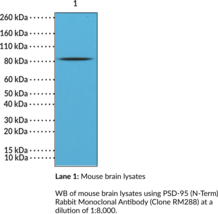
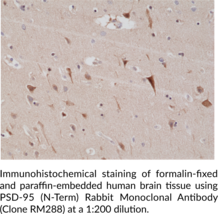
Postsynaptic density protein-95 (PSD-95) is a scaffold protein and member of the membrane-associated guanylate kinase (MAGUK) family encoded by the DLG4 gene in humans.1,2 It is composed of three N-terminal PDZ domains that facilitate protein-protein interactions and are subject to palmitoylation, which regulates its membrane localization, a Src homology domain that interacts with the tyrosine kinases Src, Lyn, and Yes, and a C-terminal catalytically inactive guanylate kinase domain.1 PSD-95 is expressed in excitatory synapses and localizes to the postsynaptic density, a network of proteins that facilitates the stabilization and trafficking of receptors and ion channels to the postsynaptic membrane.1,3 PSD-95 interacts with the transmembrane AMPA receptor-associated protein stargazin, as well as the NR2 subunit of the NMDA receptor, regulating glutamatergic signaling, synaptic plasticity, and neurodevelopment.1,4 DLG4 mutations have been found in patients with schizophrenia or autism.1 Cayman's PSD-95 (N-Term) Rabbit Monoclonal Antibody (Clone RM288) can be used for immunohistochemistry (IHC) and Western blot (WB) applications.
WARNING This product is not for human or veterinary use.
References & Product Citations
1. PSD95: A synaptic protein implicated in schizophrenia or autism? Prog. Neuropsychopharmacol. Biol. Psychiatry 82, 187-194 (2018).
2. Postsynaptic density protein 95 (PSD-
3. The role of postsynaptic density proteins in neural degeneration and regeneration. Neural Regen. Res. 11(6), 906-907 (2016).
4. Excitation control: Balancing PSD-
Contact Info
Cayman Chemical1180 East Ellsworth RoadAnn Arbor, Michigan 48108 USAToll Free: (800) 364-9897(USA and Canada only)Fax: (734) 971-3640


