
Technical Support & Resources
Visit our FAQ
Contact Us
Toll Free Phone (USA and Canada Only): (888) 526-5351
Direct Phone: (734) 975-3888
Product Categories

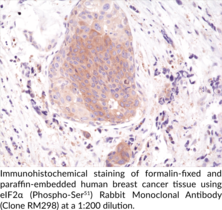
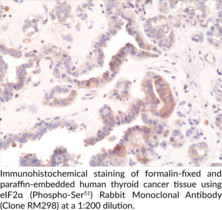
Technical Information
- Eukaryotic Translation Initiation Factor 2 Subunit 1
Shipping & Storage Information
Recommended Products
Certificates of Analysis & Batch Specific Data
Provide batch numbers separated by commas to download or request available product inserts, QC sheets, certificates of analysis, data packs, and GC-MS data.
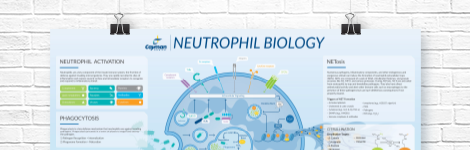
Neutrophil Biology Wall Poster
Explore how neutrophils shape the immune response in health and disease. This poster highlights neutrophil pathogen defense mechanisms, including phagocytosis, degranulation, and NETosis, as well as neutrophil roles in inflammation and NET-associated pathologies.
DOWNLOAD NOWProduct Description
eIF2α is the α subunit of eukaryotic inhibition factor 2, which also includes eIF2β and eIF2γ subunits and is involved in the initiation of translation.1 eIF2α is composed of a globular N-terminal domain, which contains an S1 domain and an α-helical domain, and a globular C-terminal domain.2 eIF2α can be phosphorylated at serine 51 by the eIF2α kinases HRI/EIF2AK1, PKR/EIF2AK2, PERK/EIF2AK3, and GCN2/EIF2AK4 following various cell and ER stressors, viral invasion, or nutrient deprivation, among other factors.3,4,5 Phosphorylation of eIF2α at serine 51 promotes the interaction between eIF2α and the guanine nucleotide exchange factor eIF2B, which inhibits eIF2B activity and prevents the initiation of translation, reducing global protein synthesis in the cell.1 The transcription of specific factors involved in the integrated stress response (ISR), such as ATF4, is upregulated by eIF2α phosphorylation.3 Dephosphorylation of eIF2α by the protein phosphatase 1 (PP1) complex, which includes GADD34 and CReP, terminates the ISR and returns protein synthesis back to basal levels. Cayman’s eIF2α (Phospho-Ser51) Rabbit Monoclonal Antibody (Clone RM298) can be used for immunohistochemistry (IHC) and Western blot (WB) applications.
WARNING This product is not for human or veterinary use.
References & Product Citations
1. Phosphorylation of serine 51 in initiation factor 2α (eIF2α) promotes complex formation between eIF2α(P) and eIF2B and causes inhibition in the guanine nucleotide exchange activity of eIF2B. Biochemistry 39(42), 12929-12938 (2000).
2. Solution structure of human initiation factor eIF2α reveals homology to the elongation factor eEF1B. Structure 12(9), 1693-1704 (2004).
3. The integrated stress response. EMBO Rep. 17(10), 1374-1395 (2016).
4. Phosphorylation of eukaryotic initiation factor-
5. Phosphorylation of eIF2α at serine 51 is an important determinant of cell survival and adaptation to glucose deficiency. Mol. Biol. Cell 21(18), 3220-3231 (2010).
Contact Info
Cayman Chemical1180 East Ellsworth RoadAnn Arbor, Michigan 48108 USAToll Free: (800) 364-9897(USA and Canada only)Fax: (734) 971-3640


