
Technical Support & Resources
Visit our FAQ
Contact Us
Toll Free Phone (USA and Canada Only): (888) 526-5351
Direct Phone: (734) 975-3888
Product Categories
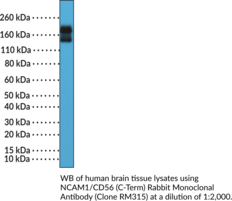
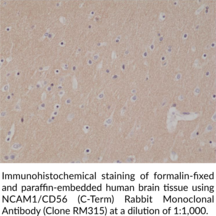
Technical Information
- Cluster of Differentiation 56
- Neural Cell Adhesion Molecule 1
Shipping & Storage Information
Recommended Products
Certificates of Analysis & Batch Specific Data
Provide batch numbers separated by commas to download or request available product inserts, QC sheets, certificates of analysis, data packs, and GC-MS data.
Visit Our Cancer Resource Center
Find Tools & Resources to Study the Hallmarks of Cancer
- Cancer cell signaling & regulation
- Cancer metabolism
- Tumor microenvironment
Product Description
CD56, also known as neural cell adhesion molecule 1 (NCAM1), is a cell surface glycoprotein and member of the immunoglobulin superfamily that is involved in cellular adhesion and neural development.1,2,3 Alternative splicing of the NCAM1 pre-mRNA produces several isoforms, including two transmembrane isoforms of 180 and 140 kDa, NCAM-180 and NCAM-140, respectively, that differ in size of the cytoplasmic domain, and a 120 kDa isoform, NCAM-120, that lacks the cytoplasmic domain and is linked to the plasma membrane by a glycosylphosphatidylinositol (GPI) anchor.1 CD56 is composed of an extracellular N-terminal domain containing five immunoglobulin-like (Ig-like) domains and two fibronectin type III domains that mediate homophilic and heterophilic interactions, a transmembrane domain, and an intracellular C-terminal signaling domain.2,4 It is used as a marker for neural and natural killer (NK) cells, but is also expressed by other immune cells, including monocytes, T cells, and dendritic cells (DCs), as well as tumor cells, in an isoform-dependent manner.1,2,4 CD56 is increased on NK cells by stimulation with IL-15 or IL-2 and correlates with upregulation of the NK cell activating receptors NKG2D, NKp30, and NKp46 and NK cell-mediated cytotoxicity.1,4 Homophilic CD56 interactions induce neurite outgrowth of cerebellar neurons and promote NK cell-mediated tumor cell lysis in vitro.1,2,3,4 The frequency of peripheral blood CD56bright NK cells is increased in patients with melanoma and associated with reduced overall survival.5 Cayman's NCAM1/CD56 (C-Term) Rabbit Monoclonal Antibody (Clone RM315) can be used for immunohistochemistry (IHC) and Western blot (WB) applications. The antibody recognizes NCAM-180 and NCAM-140 from human samples.
WARNING This product is not for human or veterinary use.
References & Product Citations
1. CD56 in the immune system: More than a marker for cytotoxicity? Front. Immunol. 8, 892 (2017).
2. NCAM-
3. Activation of the FGF receptor underlies neurite outgrowth stimulated by L1, N-
4. CD56 homodimerization and participation in anti-
5. Circulating CD56 bright NK cells inversely correlate with survival of melanoma patients. Sci. Rep. 9(1), 4487 (2019).
Contact Info
Cayman Chemical1180 East Ellsworth RoadAnn Arbor, Michigan 48108 USAToll Free: (800) 364-9897(USA and Canada only)Fax: (734) 971-3640


