
Technical Support & Resources
Visit our FAQ
Contact Us
Toll Free Phone (USA and Canada Only): (888) 526-5351
Direct Phone: (734) 975-3888
Product Categories
Technical Information
- Human Chorionic Gonadotropin
Shipping & Storage Information
Recommended Products
Certificates of Analysis & Batch Specific Data
Provide batch numbers separated by commas to download or request available product inserts, QC sheets, certificates of analysis, data packs, and GC-MS data.

Visit Our Cancer Resource Center
Find Tools & Resources to Study the Hallmarks of Cancer
- Cancer cell signaling & regulation
- Cancer metabolism
- Tumor microenvironment
Product Description
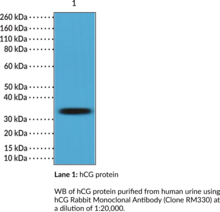
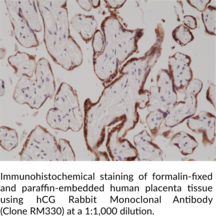
Human chorionic gonadotropin (hCG) is glycoprotein hormone secreted during pregnancy that has important roles in the maintenance of pregnancy.1,2 It exists as a heterodimer that is composed of two subunits, hCGα and hCGβ, that are subject to glycosylation, generating a variety of glycosylated hCG variants that have distinct biological functions.3,4 The expression of genes encoding hCGα and hCGβ are regulated by a variety of hormones, growth factors, and cytokines.4 It is secreted by placental trophoblasts during early pregnancy and serum hCG levels peak from gestational weeks 7 to 10.1 hCG has numerous roles in pregnancy, including stimulating production of progesterone from the corpus luteum and promoting angiogenesis of uterine vasculature and the growth of fetal organs.5 Urinary hCG levels have been commonly used in the determination of pregnancy.1 Increased serum, urinary, or tumor levels of hCGβ have been found in patients with a variety of cancers, including bladder, lung, cervical, or ovarian cancer, and are associated with poor prognosis.6 Cayman's hCG Rabbit Monoclonal Antibody (Clone RM330) can be used for ELISA, immunohistochemistry (IHC), and Western blot (WB) applications. This antibody recognizes the hCGβ subunit in both the monomeric and hCGαβ heterodimeric forms.
WARNING This product is not for human or veterinary use.
References & Product Citations
1. Human chorionic gonadotropin in cancer. Clin. Biochem. 37(7), 549-561 (2004).
2. Identification of a heterodimer-
3. HCG variants, the growth factors which drive human malignancies. Am. J. Cancer Res. 2(1), 22-35 (2012).
4. hCG: Biological functions and clinical applications. Int. J. Mol. Sci. 18(10), 2037 (2017).
5. Biological functions of hCG and hCG-
6. Does hCG or hCG play a role in cancer cell biology? Mol. Cell. Endocrinol. 329(1-2), 62-70 (2010).
Contact Info
Cayman Chemical1180 East Ellsworth RoadAnn Arbor, Michigan 48108 USAToll Free: (800) 364-9897(USA and Canada only)Fax: (734) 971-3640


