
Technical Support & Resources
Visit our FAQ
Contact Us
Toll Free Phone (USA and Canada Only): (888) 526-5351
Direct Phone: (734) 975-3888
Product Categories
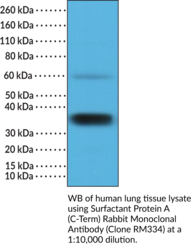
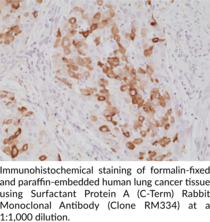
Technical Information
- SP-A
Shipping & Storage Information
Recommended Products
Certificates of Analysis & Batch Specific Data
Provide batch numbers separated by commas to download or request available product inserts, QC sheets, certificates of analysis, data packs, and GC-MS data.
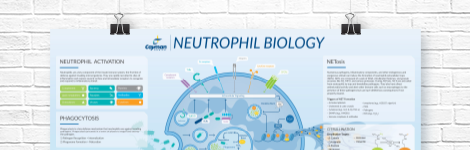
Neutrophil Biology Wall Poster
Explore how neutrophils shape the immune response in health and disease. This poster highlights neutrophil pathogen defense mechanisms, including phagocytosis, degranulation, and NETosis, as well as neutrophil roles in inflammation and NET-associated pathologies.
DOWNLOAD NOWProduct Description
Surfactant protein A (SP-A) is a hydrophilic surfactant protein and member of the collectin family with roles in microbial and apoptotic cell phagocytosis, as well as the regulation of cytokine expression.1,2,3,4 It is composed of an N-terminal cysteine-rich domain that facilitates crosslinking of SP-A monomers, a collagen-like domain that induces multimerization, and a C-terminal carbohydrate recognition domain (CRD) for pathogen recognition. SP-A is expressed primarily in pulmonary surfactant but is also expressed in the brain, kidney, and female reproductive tract.4 It functions as an octadecamer that binds bacterial, fungal, and viral pathogens to enhance opsonized phagocytosis. SP-A interacts with toll-like receptors to modulate the production of various cytokines and inflammatory mediators in response to infection.1,2,3,4 Serum levels of SP-A are associated with early relapse or exacerbation in patients with chronic obstructive pulmonary disease (COPD).4 Cayman’s Surfactant Protein A (C-Term) Rabbit Monoclonal Antibody (Clone RM334) can be used for immunohistochemistry (IHC) and Western blot (WB) applications.
WARNING This product is not for human or veterinary use.
References & Product Citations
1. Immunoregulatory functions of surfactant proteins. Nat. Rev. Immunol. 5(1), 58-68 (2005).
2. An insight into the diverse roles of surfactant proteins, SP-
3. Surfactant proteins A and D: Trimerized innate immunity proteins with an affinity for viral fusion proteins. J. Innate Immun. 11(1), 13-28 (2019).
4. Recent progress on surfactant protein A: cellular function in lung and kidney disease development. Am. J. Physiol. Cell Physiol. 319(2), C316-C320 (2020).
Contact Info
Cayman Chemical1180 East Ellsworth RoadAnn Arbor, Michigan 48108 USAToll Free: (800) 364-9897(USA and Canada only)Fax: (734) 971-3640


