
Technical Support & Resources
Visit our FAQ
Contact Us
Toll Free Phone (USA and Canada Only): (888) 526-5351
Direct Phone: (734) 975-3888
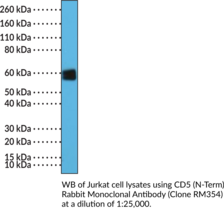
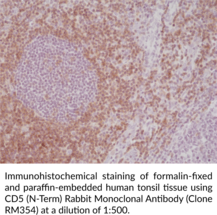
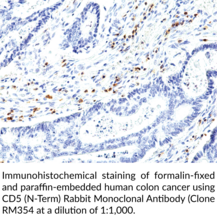
Technical Information
- Cluster of Differentiation 5
- Leu-1
- Ly-1 Antigen
- Lyt-1
Shipping & Storage Information
Recommended Products
Certificates of Analysis & Batch Specific Data
Provide batch numbers separated by commas to download or request available product inserts, QC sheets, certificates of analysis, data packs, and GC-MS data.

Visit Our Cancer Resource Center
Find Tools & Resources to Study the Hallmarks of Cancer
- Cancer cell signaling & regulation
- Cancer metabolism
- Tumor microenvironment
Product Description
CD5 is a type I transmembrane glycoprotein receptor and member of the scavenger receptor cysteine-rich (SRCR) superfamily.1 It is composed of three extracellular cysteine-rich domains, a transmembrane region, and a cytoplasmic tail containing an imperfect immunoreceptor tyrosine-based activating motif (ITAM). CD5 is expressed at differing levels on mature CD4+ and CD8+ T cells and thymocytes, and at lower levels on B1a cells and B cell chronic lymphocytic leukemia (B-CLL) cells.2 It acts a negative regulator of T cell signaling, despite the presence of an ITAM, and has a role in promoting the survival of thymocytes and mature T cells. CD5+ B cells are at their highest levels during development, lowest during early adulthood, and increase in middle-to-late adulthood, a change that correlates with an increased incidence of B-CLL and mantle cell lymphoma (MCL).3 CD5+ B cells primarily have a follicular mantle phenotype and produce low affinity polyreactive antibodies. CD5 expression on T cells protects against experimental autoimmune encephalomyelitis (EAE) in mice, but the levels of CD5+ B cells are increased in patients with systemic lupus erythematosus (SLE).4,5 CD5 has a complex role in cancer, with high levels of CD5 on tumor-infiltrating T cells (TILs) protecting TILs from apoptosis, but reduced CD5 levels on TILs enhancing CD8+ T cell-mediated lysing of malignant cells.4 CD5 has commonly been used as a marker of T cells, B1a cells, and B-CLL cells.2 Cayman’s CD5 (N-Term) Rabbit Monoclonal Antibody (Clone RM354) can be used for immunohistochemistry (IHC) and Western blot (WB) applications.
WARNING This product is not for human or veterinary use.
References & Product Citations
1. CD5 negatively regulates the T-
2. The multiple faces of CD5. J. Leukoc. Biol. 105(5), 891-904 (2019).
3. The CD5+ B-
4. CD5: A safeguard against autoimmunity and a shield for cancer cells. Autoimmun. Rev. 8(4), 349-353 (2009).
5. The role of CD5-
Contact Info
Cayman Chemical1180 East Ellsworth RoadAnn Arbor, Michigan 48108 USAToll Free: (800) 364-9897(USA and Canada only)Fax: (734) 971-3640


