
Technical Support & Resources
Visit our FAQ
Contact Us
Toll Free Phone (USA and Canada Only): (888) 526-5351
Direct Phone: (734) 975-3888
Product Categories
Research Area
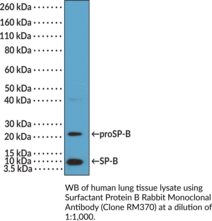
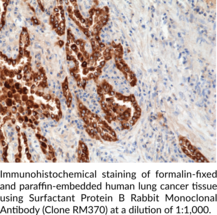
Technical Information
- SP-B
Shipping & Storage Information
Recommended Products
Certificates of Analysis & Batch Specific Data
Provide batch numbers separated by commas to download or request available product inserts, QC sheets, certificates of analysis, data packs, and GC-MS data.
Product Description
Surfactant protein B (SP-B) is a hydrophobic surfactant protein and member of the saposin-like family encoded by SFTBP in humans.1 Mature SP-B is a 79-amino acid peptide formed by cleavage of proSP-B that contains three intramolecular disulfide bridges, which stabilize the tertiary structure. SP-B is expressed in alveolar type II cells, functions as a homodimer formed via intermolecular disulfide bond formation, and is required for the assembly of pulmonary surfactant, as well as the formation of stable surface-active films at the air-liquid alveolar interface. Blood levels of SB-P are increased in patients with mechanical ventilation- or pulmonary edema-induced acute alveolar cell damage.1,2 Mutations in SFTBP induce SP-B deficiency, an autosomal recessive disorder in infants characterized by progressive hypoxemic respiratory failure in the first year of life.3 Cayman’s Surfactant Protein B Rabbit Monoclonal Antibody (Clone RM370) can be used for immunohistochemistry (IHC) and Western blot (WB) applications.
WARNING This product is not for human or veterinary use.
References & Product Citations
1. Surfactant protein B: From biochemistry to its potential role as diagnostic and prognostic marker in heart failure. Int. J. Cardiol. 221, 456-462 (2016).
2. Cardiogenic Pulmonary Edema. Am. J. Med. Sci. 358(6), 389-397 (2019).
3. Surfactant protein B deficiency in infants with respiratory failure. J. Perinat. Neonatal Nurs. 18(1), 61-67 (2004).
Contact Info
Cayman Chemical1180 East Ellsworth RoadAnn Arbor, Michigan 48108 USAToll Free: (800) 364-9897(USA and Canada only)Fax: (734) 971-3640


