
Technical Support & Resources
Visit our FAQ
Contact Us
Toll Free Phone (USA and Canada Only): (888) 526-5351
Direct Phone: (734) 975-3888
Product Categories
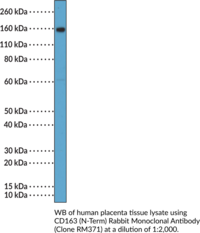
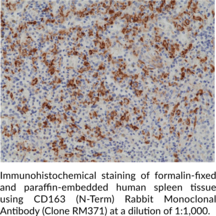
Technical Information
Shipping & Storage Information
Recommended Products
Certificates of Analysis & Batch Specific Data
Provide batch numbers separated by commas to download or request available product inserts, QC sheets, certificates of analysis, data packs, and GC-MS data.
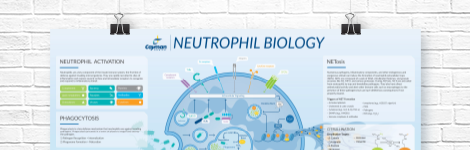
Neutrophil Biology Wall Poster
Explore how neutrophils shape the immune response in health and disease. This poster highlights neutrophil pathogen defense mechanisms, including phagocytosis, degranulation, and NETosis, as well as neutrophil roles in inflammation and NET-associated pathologies.
DOWNLOAD NOWProduct Description
CD163 is a member of the scavenger receptor family that has a role in inflammation.1,2 It is composed of an N-terminal ectodomain, which contains nine scavenger receptor cysteine-rich (SRCR) class B domains that mediate protein-protein interactions, a transmembrane segment, and a short cytoplasmic tail.1,3 Alternative splicing of the CD163 pre-mRNA produces several isoforms, including three variants that differ in length of the cytoplasmic tail.3 CD163 is expressed on the surface of monocytes and macrophages and used as a marker of M2 alternatively activated macrophages.1 CD163 protein levels are increased by hemoglobin, IL-6, IL-10, or glucocorticoids and decreased by LPS, IL-4, TNF-α, or IFN-γ.1,4 It binds to and internalizes haptoglobin-hemoglobin (Hp-Hb) complexes, leading to degradation of the Hp-Hb complex and production of anti-inflammatory heme metabolites.1 A soluble form of CD163 (sCD163), resulting from proteolytic cleavage of membrane-bound CD163, has been found in plasma and other tissue fluids.3 CD163+ macrophages in inflamed tissues or plasma sCD163 levels are increased in numerous acute or chronic inflammatory diseases, including sepsis, atherosclerosis, rheumatoid arthritis, and multiple sclerosis.1,2 Cayman's CD163 (N-Term) Rabbit Monoclonal Antibody (Clone RM371) can be used for immunohistochemistry (IHC) and Western blot (WB) applications.
WARNING This product is not for human or veterinary use.
References & Product Citations
1. CD163 and inflammation: Biological, diagnostic, and therapeutic aspects. Antioxid. Redox Signal. 18(17), 2352-2363 (2013).
2. Targeting of CD163+ macrophages in inflammatory and malignant diseases. Int. J. Mol. Sci. 21(15), 5497 (2020).
3. The macrophage scavenger receptor CD163: Endocytic properties of cytoplasmic tail variants. J. Leukoc. Biol. 79(4), 837-845 (2006).
4. Regulation of scavenger receptor CD163 expression in human monocytes and macrophages by pro-
Contact Info
Cayman Chemical1180 East Ellsworth RoadAnn Arbor, Michigan 48108 USAToll Free: (800) 364-9897(USA and Canada only)Fax: (734) 971-3640


