
Technical Support & Resources
Visit our FAQ
Contact Us
Toll Free Phone (USA and Canada Only): (888) 526-5351
Direct Phone: (734) 975-3888
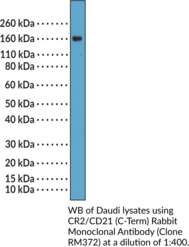
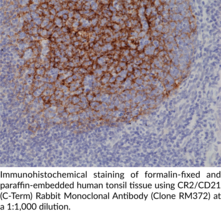
Technical Information
- Complement Receptor 2
- Epstein Barr Virus Receptor, Complement C3d Receptor
- C3DR
Shipping & Storage Information
Recommended Products
Certificates of Analysis & Batch Specific Data
Provide batch numbers separated by commas to download or request available product inserts, QC sheets, certificates of analysis, data packs, and GC-MS data.
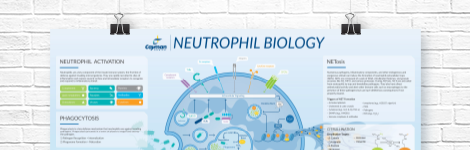
Neutrophil Biology Wall Poster
Explore how neutrophils shape the immune response in health and disease. This poster highlights neutrophil pathogen defense mechanisms, including phagocytosis, degranulation, and NETosis, as well as neutrophil roles in inflammation and NET-associated pathologies.
DOWNLOAD NOWProduct Description
Complement receptor 2 (CR2), also known as CD21, is a type I transmembrane glycoprotein with a role in the complement system.1 It is composed of an extracellular domain that contains 15 or 16 short consensus repeats involved in stabilizing the triple-loop domain conformation, a transmembrane domain, and a short cytoplasmic domain containing one PKC and one tyrosine kinase phosphorylation site. CR2 is primarily expressed on mature B cells and follicular dendritic cells (FDCs) but is also expressed on the pharyngeal and cervical epithelium, thymocytes, and a subset of peripheral T cells.1,2 It forms a complex with CD19, TAPA-1, and Leu-19 on the surface of B cells, where it acts as a ligand-fixing subunit that binds surface-fixed cleavage fragments of complement protein C3 on antigen presenting cells to amplify antigen-induced B cell activation and antibody production.1 CR2 is also a receptor for Epstein Barr Virus. B cell levels of CR2 are decreased in patients with systemic lupus erythematosus (SLE).3 Cayman’s CR2/CD21 (C-Term) Rabbit Monoclonal Antibody (Clone RM372) can be used for immunohistochemistry (IHC) and Western blot (WB) applications.
WARNING This product is not for human or veterinary use.
References & Product Citations
1. Functional properties of soluble CD21. Immunopharmacology 42(1-3), 31-37 (1999).
2. Comparative functional evolution of human and mouse CR1 and CR2. J. Immunol. 181(5), 2953-2959 (2008).
3. Complement and autoimmunity. Biomed. Pharmacother. 57, 269–273 (2003).
Contact Info
Cayman Chemical1180 East Ellsworth RoadAnn Arbor, Michigan 48108 USAToll Free: (800) 364-9897(USA and Canada only)Fax: (734) 971-3640


