
Technical Support & Resources
Visit our FAQ
Contact Us
Toll Free Phone (USA and Canada Only): (888) 526-5351
Direct Phone: (734) 975-3888
Product Categories
Technical Information
- NR3C3
- Nuclear Receptor Subfamily 3 Group C Member 3
Shipping & Storage Information
Recommended Products
Certificates of Analysis & Batch Specific Data
Provide batch numbers separated by commas to download or request available product inserts, QC sheets, certificates of analysis, data packs, and GC-MS data.

Visit Our Cancer Resource Center
Find Tools & Resources to Study the Hallmarks of Cancer
- Cancer cell signaling & regulation
- Cancer metabolism
- Tumor microenvironment
Product Description
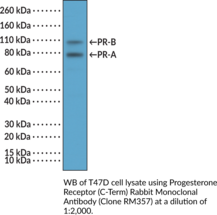
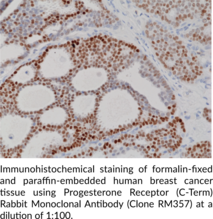
The progesterone receptor is a ligand-dependent transcription factor and member of the nuclear steroid hormone receptor family encoded by PGR in humans.1 It is composed of a C-terminal ligand-binding domain, a central globular DNA-binding domain, and an intrinsically disordered N-terminal domain. It is expressed primarily in the CNS and female reproductive tissues, where it has roles in maintaining cognitive flexibility and reproductive biology, respectively, as well as in bone and the cardiovascular system.1,2 Two active isoforms of the progesterone receptor, N-terminally truncated progesterone receptor A and full-length progesterone receptor B, are produced by transcription of PGR using two promoters, and function as an inhibitor and activator of transcription, respectively. The inactive progesterone receptor is localized to the cytosol and assembled into an inactive multiprotein chaperone complex, which is essential for maintaining the progesterone receptor in a ligand-binding competent state. Progesterone binding to the inactive progesterone receptor induces a conformational change, dissociation of chaperones, dimerization, and nuclear translocation, resulting in modulation of gene transcription. Progesterone receptor levels are increased in uterine leiomyoma tissue compared with normal myometrium in patients with uterine fibroids and progesterone receptor expression is associated with favorable overall survival and recurrence-free survival in patients with ovarian cancer.3,4 Cayman’s Progesterone Receptor (C-Term) Rabbit Monoclonal Antibody (Clone RM357) can be used for immunohistochemistry (IHC) and Western blot (WB) applications.
WARNING This product is not for human or veterinary use.
References & Product Citations
1. Progesterone receptor signaling mechanisms. J. Mol. Biol. 428(19), 3831-3849 (2016).
2. Progesterone action in human tissues: Regulation by progesterone receptor (PR) isoform expression, nuclear positioning and coregulator expression. Nucl. Recept. Signal. 7, e009 (2009).
3. Role of nuclear progesterone receptor isoforms in uterine pathophysiology. Hum. Reprod. Update 21(2), 155-173 (2015).
4. Prognostic value of progesterone receptor expression in ovarian cancer: A meta-
Contact Info
Cayman Chemical1180 East Ellsworth RoadAnn Arbor, Michigan 48108 USAToll Free: (800) 364-9897(USA and Canada only)Fax: (734) 971-3640


