
Technical Support & Resources
Visit our FAQ
Contact Us
Toll Free Phone (USA and Canada Only): (888) 526-5351
Direct Phone: (734) 975-3888
Product Categories
Technical Information
- Antigen NY-CO-13
- Cellular Tumor Antigen p53
- Phosphoprotein p53
- Transformation-related Protein 53
- Tumor Protein p53
- Tumor Suppressor p53
Shipping & Storage Information
Recommended Products
Certificates of Analysis & Batch Specific Data
Provide batch numbers separated by commas to download or request available product inserts, QC sheets, certificates of analysis, data packs, and GC-MS data.

Visit Our Cancer Resource Center
Find Tools & Resources to Study the Hallmarks of Cancer
- Cancer cell signaling & regulation
- Cancer metabolism
- Tumor microenvironment
Product Description
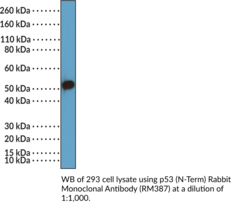
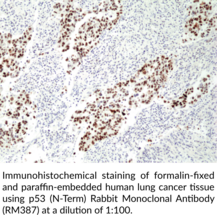
p53 is a transcription factor and tumor suppressor encoded by TP53 in humans with roles in cell cycle arrest, apoptosis, senescence, differentiation, and DNA repair.1,2 It is composed of two N-terminal intrinsically disordered transactivation domains (TADs), a proline-rich domain (PRD), a DNA-binding domain (DBD), a tetramerization domain (TD), and an intrinsically disordered C-terminal domain.1 p53 is ubiquitously expressed, with protein levels increasing under conditions of extra- or intracellular stress, such as DNA damage, oncogene activation, oxidative stress, or hypoxia.3 It is activated and translocated to the nucleus in response to cellular stress via post-translational modifications, such as phosphorylation, methylation, and acetylation, where it binds p53 consensus DNA-binding elements and regulates transcription of its target genes in a cell-, tissue-, and stress signal type-specific manner.1,3 Loss-of-function and/or gain-of-function mutations in TP53 occur in approximately 50% of human cancers.2 Cayman’s p53 (N-Term) Rabbit Monoclonal Antibody (RM387) can be used for immunohistochemistry (IHC) and Western blot (WB) applications.
WARNING This product is not for human or veterinary use.
References & Product Citations
1. p53 Modifications: Exquisite decorations of the powerful guardian. J. Mol. Cell Biol. 11(7), 564-577 (2019).
2. Gain-
3. Mutant p53 in cancer: Accumulation, gain-
Contact Info
Cayman Chemical1180 East Ellsworth RoadAnn Arbor, Michigan 48108 USAToll Free: (800) 364-9897(USA and Canada only)Fax: (734) 971-3640


