
Technical Support & Resources
Visit our FAQ
Contact Us
Toll Free Phone (USA and Canada Only): (888) 526-5351
Direct Phone: (734) 975-3888
Product Categories

Technical Information
- Carbamoyl Phosphate Synthase, mitochondrial
- CPSase I
Shipping & Storage Information
Recommended Products
Certificates of Analysis & Batch Specific Data
Provide batch numbers separated by commas to download or request available product inserts, QC sheets, certificates of analysis, data packs, and GC-MS data.

Visit Our Cancer Resource Center
Find Tools & Resources to Study the Hallmarks of Cancer
- Cancer cell signaling & regulation
- Cancer metabolism
- Tumor microenvironment
Product Description
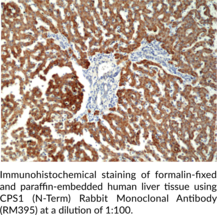
Carbamoyl phosphate synthetase I (CPS1) is a ligase involved in the urea cycle.1 It is composed of an N-terminal domain containing an ancestral inactive glutaminase, a bicarbonate phosphorylation site, and a C-terminal domain containing a carbamate phosphorylation site and the binding site for the CPS1 allosteric activator N-acetyl-L-glutamate (NAG). It is primarily expressed in the liver and intestinal epithelial cells and is localized to the mitochondrial matrix.2,1 CPS1, with NAG as a cofactor, catalyzes the formation of carbamoyl phosphate from ammonia, bicarbonate, and ATP as the first, rate-limiting step in the urea cycle. Mutations in CPS1 result in CPS1 deficiency, a disorder characterized by low levels of active CPS1, arginine, and citrulline and high levels of ammonia and glutamine, leading to neurological deficits and, potentially, death.3,4 Protein levels of CPS1 are increased in patient-derived rectal cancer tumors and associated with shorter disease-specific survival and metastasis-free survival.5 Cayman’s CPS1 (N-Term) Rabbit Monoclonal Antibody (RM395) can be used for immunohistochemistry (IHC) and Western blot (WB) applications.
WARNING This product is not for human or veterinary use.
References & Product Citations
1. Genetic, structural and biochemical basis of carbamoyl phosphate synthetase 1 deficiency. Mol. Genet. Metab. 101(4), 311-323 (2010).
2. Expression of nuclear genes encoding the urea cycle enzymes, carbamoyl-
3. CPS1: Looking at an ancient enzyme in a modern light. Mol. Genet. Metab. 131(3), 289-298 (2020).
4. Understanding carbamoyl-
5. Overexpression of CPS1 is an independent negative prognosticator in rectal cancers receiving concurrent chemoradiotherapy. Tumour Biol. 35(11), 11097-11105 (2014).
Contact Info
Cayman Chemical1180 East Ellsworth RoadAnn Arbor, Michigan 48108 USAToll Free: (800) 364-9897(USA and Canada only)Fax: (734) 971-3640


