
Technical Support & Resources
Visit our FAQ
Contact Us
Toll Free Phone (USA and Canada Only): (888) 526-5351
Direct Phone: (734) 975-3888
Product Categories
Application
Technical Information
- Cluster of Differentiation 1a
- T Cell Surface Glycoprotein CD1a
Shipping & Storage Information
Recommended Products
Certificates of Analysis & Batch Specific Data
Provide batch numbers separated by commas to download or request available product inserts, QC sheets, certificates of analysis, data packs, and GC-MS data.
Lipid Resource Center
Discover Products & Resources for Lipid Research
- High-purity lipid standards
- Lipid roles in biology
- Lipids in health & disease
- Lipids for pharmaceutical development
- Protocols, advice, & resources
Product Description
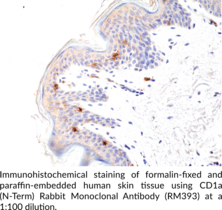
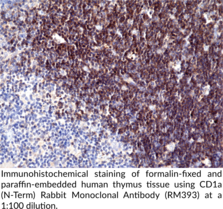
CD1a is a transmembrane glycoprotein and member of the CD1 family.1 CD1a exists as a heterodimer where each monomer is composed of a transmembrane CD1 heavy chain that contains three extracellular domains (α1-α3), which associate with β2-microglobulin to form a lipid-binding groove, as well as a short cytoplasmic tail that lacks the typical CD1 family tyrosine-containing hydrophobic motif that localizes other CD1 molecules to endosomes and lysosomes.2 It is primarily expressed on, and has been used as a marker for, dendritic cells and is also expressed on thymocytes and Langerhans cells and localizes to the cell surface.1,2 CD1a binds to self- and foreign lipids and glycolipids and presents them to group 1 CD1-restricted T cells.1 It is a receptor for urushiol, a plant-derived allergen, and mediates its inflammatory skin response, as well as the inflammation induced by self-lipid antigens in patients with psoriasis.3 The density of CD1a protein in patient-derived tumor tissue is associated with improved clinical outcomes and survival.1 Cayman’s CD1a (N-Term) Rabbit Monoclonal Antibody (RM393) can be used for immunohistochemistry (IHC).
WARNING This product is not for human or veterinary use.
References & Product Citations
1. CD1a in human cancers: A new role for an old molecule. Trends Immunol. 25(5), 242-248 (2004).
2. Crystal structure of CD1a in complex with a sulfatide self antigen at a resolution of 2.15 Å. Nat. Immunol. 4(8), 808-815 (2003).
3. CD1a on Langerhans cells controls inflammatory skin disease. Nat. Immunol. 17(10), 1159-1166 (2016).
Contact Info
Cayman Chemical1180 East Ellsworth RoadAnn Arbor, Michigan 48108 USAToll Free: (800) 364-9897(USA and Canada only)Fax: (734) 971-3640


