
Technical Support & Resources
Visit our FAQ
Contact Us
Toll Free Phone (USA and Canada Only): (888) 526-5351
Direct Phone: (734) 975-3888
Product Categories
Technical Information
- T cell-specific Surface Glycoprotein CD28
- TP44
Shipping & Storage Information
Recommended Products
Certificates of Analysis & Batch Specific Data
Provide batch numbers separated by commas to download or request available product inserts, QC sheets, certificates of analysis, data packs, and GC-MS data.

Visit Our Cancer Resource Center
Find Tools & Resources to Study the Hallmarks of Cancer
- Cancer cell signaling & regulation
- Cancer metabolism
- Tumor microenvironment
Product Description
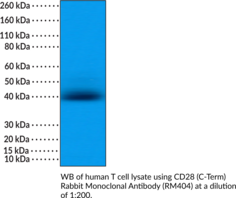
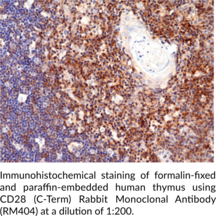
CD28 is a glycoprotein and member of the CD28/B7 family of co-stimulatory receptors that promotes T cell activation.1 Alternative splicing of CD28 produces one full-length long isoform, CD28 long, and three short isoforms, CD28a, CD28b, and CD28c.2 CD28 long exists as a membrane-bound homodimer and contains a leader peptide, an extracellular immunoglobulin variable (IgV) domain that interacts with the co-stimulatory molecules CD80 (Item No. 32013) or CD86 and a cytoplasmic tail that mediates the association with the signal transduction enzyme PI3K and is critical for T cell activation.1,3 CD28a, CD28b, and CD28c contain truncated extracellular or transmembrane domains and exist as soluble monomers (CD28a) or membrane-bound homodimers (CD28b and CD28c).2 CD28 is constitutively expressed on the surface of T cells, upregulated by antigen-presenting cells (APCs) displaying MHC-bound antigen, and downregulated after T cell activation.4,5 CD28 competes with CTLA-4 (Item No. 32009), an inhibitor of T cell activation also expressed on T cells, for binding to CD80 or CD86, promoting T cell activation by inducing the production of cytokines, such as IL-2 and IFN-γ, and decreasing the T cell receptor activation threshold.4 Genetic deletion of Cd28 abolishes cellular infiltration and bone erosion in the joints and decreases serum levels of anti-collagen-IgG in a mouse model of collagen-induced arthritis.6 CD28 levels are decreased on plasma cells isolated from patients with multiple myeloma and this decrease is associated with disease progression and poor prognosis.7 CD28 SNPs have been found in individuals with sporadic breast cancer.8 Cayman’s CD28 (C-Term) Rabbit Monoclonal Antibody (RM404) can be used for immunohistochemistry (IHC) and Western blot (WB) applications.
WARNING This product is not for human or veterinary use.
References & Product Citations
1. CD28 costimulation: from mechanism to therapy. Immunity 44(5), 973-988 (2016).
2. Identification of three alternatively spliced variants of human CD28 mRNA. Biochem. Biophys. Res. Commun. 259(1), 34-37 (1999).
3. The cytoplasmic domain of CD28 is both necessary and sufficient for costimulation of interleukin-
4. T cell activation. The Immune Response: Basic and Clinical Principles 373-401 (2006).
5. Modulation of CD28 expression: Distinct regulatory pathways during activation and replicative senescence. J. Immunol. 162(11), 6572-6579 (1999).
6. CD28-
7. CD28 expressed on malignant plasma cells induces a prosurvival and immunosuppressive microenvironment. J. Immunol. 187(3), 1243-1253 (2011).
8. Investigation of CD28 gene polymorphisms in patients with sporadic breast cancer in a Chinese Han population in northeast China. PLoS One 7(10), (2012).
Contact Info
Cayman Chemical1180 East Ellsworth RoadAnn Arbor, Michigan 48108 USAToll Free: (800) 364-9897(USA and Canada only)Fax: (734) 971-3640


