
Technical Support & Resources
Visit our FAQ
Contact Us
Toll Free Phone (USA and Canada Only): (888) 526-5351
Direct Phone: (734) 975-3888
Product Categories
Technical Information
- Fc Fragment of IgE Receptor II
- FcεRII
- Low-affinity Immunoglobulin ε Fc Receptor
Shipping & Storage Information
Recommended Products
Certificates of Analysis & Batch Specific Data
Provide batch numbers separated by commas to download or request available product inserts, QC sheets, certificates of analysis, data packs, and GC-MS data.

Visit Our Cancer Resource Center
Find Tools & Resources to Study the Hallmarks of Cancer
- Cancer cell signaling & regulation
- Cancer metabolism
- Tumor microenvironment
Product Description
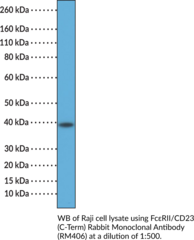
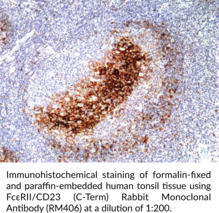
CD23, also known as FcεRII, is a type II transmembrane glycoprotein and C-type lectin encoded by FCER2 in humans.1 It is composed of a short N-terminal cytoplasmic domain, a membrane-spanning region, a stalk region, and a large C-terminal globular domain. CD23 is expressed in T and B cells, polymorphonuclear leukocytes, bone marrow stromal cells, follicular dendritic cells, and intestinal epithelial cells. Alternative splicing of FCER2 pre-mRNA produces two isoforms, CD23a and CD23b, which differ by seven amino acids in the N-terminal cytoplasmic domain and exhibit distinct functions, as well as different uptake and recycling patterns. CD23 is the low-affinity receptor for IgE and has roles in the growth and development of normal and leukemic B cells, antimicrobial immunity, and monocyte activation.1,2 It can also be released from cell surfaces by the metalloprotease ADAM10 as various soluble CD23 proteins (sCD23), all of which bind IgE and have cytokine-like activity.1 Serum levels of CD23 are increased in patients with chronic lymphocytic leukemia (CLL) or hairy cell leukemia.3 Cayman’s FcεRII/CD23 (C-Term) Rabbit Monoclonal Antibody (RM406) can be used for immunohistochemistry (IHC) and Western blot (WB) applications.
WARNING This product is not for human or veterinary use.
References & Product Citations
1. CD23/FcεRII: Molecular multi-
2. The role of CD23 in the regulation of allergic responses. Allergy 76(7), 1981-1989 (2020).
3. CD23: Novel disease marker with a split personality. Clin. Exp. Immunol. 86(3), 356-359 (1991).
Contact Info
Cayman Chemical1180 East Ellsworth RoadAnn Arbor, Michigan 48108 USAToll Free: (800) 364-9897(USA and Canada only)Fax: (734) 971-3640


