
Technical Support & Resources
Visit our FAQ
Contact Us
Toll Free Phone (USA and Canada Only): (888) 526-5351
Direct Phone: (734) 975-3888
Product Categories
Technical Information
Shipping & Storage Information
Recommended Products
Certificates of Analysis & Batch Specific Data
Provide batch numbers separated by commas to download or request available product inserts, QC sheets, certificates of analysis, data packs, and GC-MS data.

Visit Our Cancer Resource Center
Find Tools & Resources to Study the Hallmarks of Cancer
- Cancer cell signaling & regulation
- Cancer metabolism
- Tumor microenvironment
Product Description
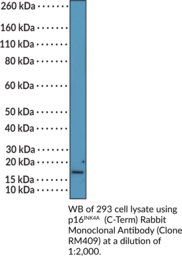
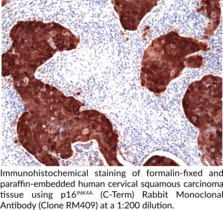
p16INK4A is a negative regulator of the cell cycle encoded by the CDKN2A gene in humans that limits cell cycle progression and promotes cellular senescence.1,2 It induces cell cycle arrest at the G1 phase by binding to cyclin-dependent kinase 4 (Cdk4) or Cdk6 in the cytoplasm, inhibiting formation of the cyclin D1/Cdk4/6 complex. p16INK4A is expressed at low levels during homeostasis and is increased in response to cellular stressors, including oncogene activation and reactive oxygen species (ROS).2 It is regulated by a variety of transcriptional, translational, and epigenetic mechanisms, such as chromatin modifications mediated by polycomb repressive complex 1 (PRC1) and PRC2 that inhibit CDKN2A expression.1,2,3 Aberrant CDKN2A mRNA and p16INK4A protein levels have been found in tumor biopsies from patients with a variety of cancers, including colon, breast, gall bladder, or head and neck cancer.2 CDKN2A SNPs have been found in patients with follicular lymphoma and are associated with reduced overall survival.4 Cayman's p16INK4A (C-Term) Rabbit Monoclonal Antibody (Clone RM409) can be used for immunohistochemistry (IHC) and Western blot (WB) applications.
WARNING This product is not for human or veterinary use.
References & Product Citations
1. Implications of genetic and epigenetic alterations of CDKN2A (p16INK4a) in cancer. EBioMedicine 8, 30-39 (2016).
2. Aberrant expression of p16INK4a in human cancers – a new biomarker? Cancer Rep. Rev. 2(2), (2018).
3. The molecular balancing act of p16INK4a in cancer and aging. Mol. Cancer Res. 12(2), 167-183 (2014).
4. Inactivation of the CDKN2A tumor-
Contact Info
Cayman Chemical1180 East Ellsworth RoadAnn Arbor, Michigan 48108 USAToll Free: (800) 364-9897(USA and Canada only)Fax: (734) 971-3640


