
Technical Support & Resources
Visit our FAQ
Contact Us
Toll Free Phone (USA and Canada Only): (888) 526-5351
Direct Phone: (734) 975-3888
Product Categories
Product Type
Technical Information
- Immunoglobulin κ Light Chain
Shipping & Storage Information
Recommended Products
Certificates of Analysis & Batch Specific Data
Provide batch numbers separated by commas to download or request available product inserts, QC sheets, certificates of analysis, data packs, and GC-MS data.

Visit Our Cancer Resource Center
Find Tools & Resources to Study the Hallmarks of Cancer
- Cancer cell signaling & regulation
- Cancer metabolism
- Tumor microenvironment
Product Description
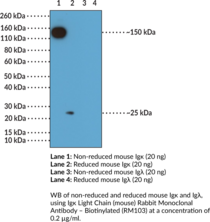
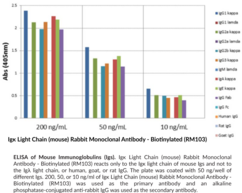
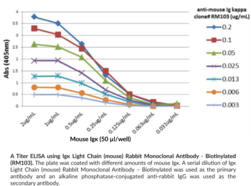
Igκ light chain is one type of light chain found in immunoglobulins, which are part of the immunoglobulin superfamily of glycoproteins that plays a central role in the adaptive immune response.1 Immunoglobulins are produced by B cells and later secreted by plasma cells as antibodies.2 They are composed of two heavy chains of approximately 50 kDa each and two light chains of approximately 25 kDa each.1 The heavy chains are linked together by disulfide bonds to form an Fc region and also combine with the light chains to form the Fab region, which mediate receptor and antigen binding, respectively.3 Mammalian immunoglobulins contain either Igκ or Igλ light chains, each of which are composed of a constant and variable domain.4 The ratio of Igκ to Igλ light chain-containing antibodies varies between species, with ratios of 20:1, 2:1, and 1:20 in mice, humans, and cattle, respectively. Igκ and Igλ free light chains (FLCs) are produced during immunoglobulin synthesis, and accumulation of these FLCs, primarily Igκ, is associated with various disorders, including light-chain deposition disease, multiple myeloma, rheumatoid arthritis, diabetic nephropathy, and systemic lupus erythematosus (SLE).2,5,6 Cayman's Igκ Light Chain (mouse) Rabbit Monoclonal Antibody - Biotinylated (RM103) can be used for ELISA and Western blot (WB) applications. The antibody recognizes the non-reduced and reduced Igκ light chain from mouse samples at approximately 150 and 25 kDa, respectively.
WARNING This product is not for human or veterinary use.
References & Product Citations
1. Structure and function of immunoglobulins. J. Allergy Clin. Immunol. 125(2 Suppl. 2), S41-S52 (2010).
2. The role of free kappa and lambda light chains in the pathogenesis and treatment of inflammatory diseases. Biomed. Pharmacother. 91, 632-644 (2017).
3. Immunoglobulin. 2020, (2020).
4. Antigen recognition by B-
5. Light chain deposition disease: Novel biological insights and treatment advances. Int. J. Lab. Hematol. 34(4), 347-355 (2012).
6. IgA kappa light and heavy chain deposition disease in multiple myeloma. Br. J. Haematol. 183(1), 13 (2018).
Contact Info
Cayman Chemical1180 East Ellsworth RoadAnn Arbor, Michigan 48108 USAToll Free: (800) 364-9897(USA and Canada only)Fax: (734) 971-3640


