
Technical Support & Resources
Visit our FAQ
Contact Us
Toll Free Phone (USA and Canada Only): (888) 526-5351
Direct Phone: (734) 975-3888
Product Categories
Product Type
Technical Information
- Immunoglobulin A
Shipping & Storage Information
Recommended Products
Certificates of Analysis & Batch Specific Data
Provide batch numbers separated by commas to download or request available product inserts, QC sheets, certificates of analysis, data packs, and GC-MS data.
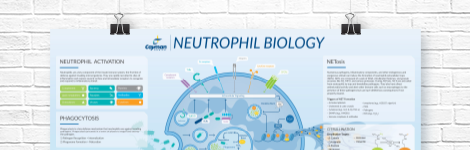
Neutrophil Biology Wall Poster
Explore how neutrophils shape the immune response in health and disease. This poster highlights neutrophil pathogen defense mechanisms, including phagocytosis, degranulation, and NETosis, as well as neutrophil roles in inflammation and NET-associated pathologies.
DOWNLOAD NOWProduct Description
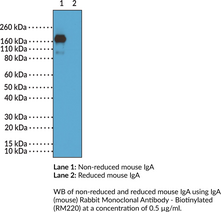
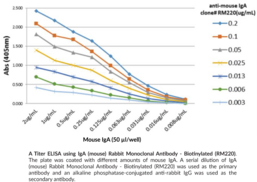
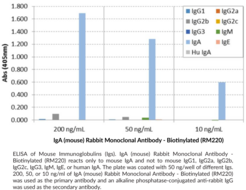
Immunoglobulin A (IgA) is a member of the immunoglobulin superfamily of glycoproteins with roles in host defense against intestinal pathogens and both quantitative and qualitative control of host commensal microbiota composition.1,2 It is produced by B cells and later secreted by plasma cells and is the most abundant antibody on mucosal surfaces that comprises at least 70% of all Ig produced in mice. Mouse IgA consists of two heavy chains of approximately 53.5 kDa each and two light chains of approximately 25 kDa each.3 Unlike human IgA, mouse IgA exists as a single isotype and is primarily found as a dimer that lacks the disulfide bonds between the light and heavy chains present in other Ig classes.3,4 Production of IgA is induced in the gut only in animals containing intestinal microbes, and the number of IgA-producing plasma cells is reduced in germ-free mice.1 IgA-deficient mice exhibit increased lethality compared with wild-type mice in a model of influenza infection, as well as reduced parasite clearance in a model of G. muris infection. However, IgA deficiency does not affect clearance of vaginal infection with herpes simplex virus 2 (HSV-2), indicating redundancy in pathogen protection with compensation by antibodies of other isotypes or innate immune mechanisms at mucosal surfaces. Cayman's IgA (mouse) Rabbit Monoclonal Antibody - Biotinylated (RM220) can be used for ELISA and Western blot (WB; non-reducing conditions) applications. The antibody recognizes IgA from mouse samples.
WARNING This product is not for human or veterinary use.
References & Product Citations
1. The immune geography of IgA induction and function. Mucosal Immunol. 1(1), 11-22 (2008).
2. Role of secretory IgA in the mucosal sensing of commensal bacteria. Gut Microbes 5(6), 688-695 (2014).
3. The subunit structure of mouse IgA. J. Immunol. 105(1), 75-84 (1970).
4. IgA: Structure, function, and developability. Antibodies (Basel) 8(4), 57 (2019).
Contact Info
Cayman Chemical1180 East Ellsworth RoadAnn Arbor, Michigan 48108 USAToll Free: (800) 364-9897(USA and Canada only)Fax: (734) 971-3640


