
Technical Support & Resources
Visit our FAQ
Contact Us
Toll Free Phone (USA and Canada Only): (888) 526-5351
Direct Phone: (734) 975-3888
Product Categories
Product Type
Application
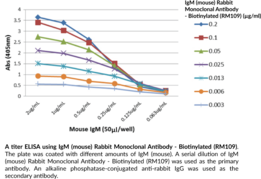
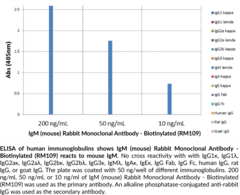
Technical Information
- Immunoglobulin M
Shipping & Storage Information
Recommended Products
Certificates of Analysis & Batch Specific Data
Provide batch numbers separated by commas to download or request available product inserts, QC sheets, certificates of analysis, data packs, and GC-MS data.
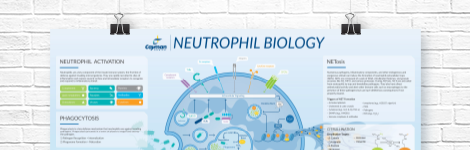
Neutrophil Biology Wall Poster
Explore how neutrophils shape the immune response in health and disease. This poster highlights neutrophil pathogen defense mechanisms, including phagocytosis, degranulation, and NETosis, as well as neutrophil roles in inflammation and NET-associated pathologies.
DOWNLOAD NOWProduct Description
Immunoglobulin M (IgM) is a member of the immunoglobulin superfamily of glycoproteins that plays a central role in the adaptive immune response and in mucosal immunology.1,2 IgM consists of two light chains of approximately 25 kDa each, as well as two heavy chains of approximately 70 kDa each that contain C-terminal extensions, known as tailpieces, which allow for IgM oligomerization.2,3 The heavy chains are linked together by disulfide bonds to form an Fc region and also combine with the light chains to form the Fab region, which mediate receptor and antigen binding, respectively.4 Five IgM proteins oligomerize via disulfide bonds in the presence of a 15-kDa joining chain, a process that is required for transcytosis of IgM from plasma cells to mucosal epithelial cells via the polyimmunoglobulin receptor (pIgR).2 Monomeric and oligomeric IgM are both ligands for the IgM and IgA-binding high affinity Igα and the Igμ Fc receptor (Fcα/μ-R) on dendritic cells, which mediates cellular uptake of IgM-conjugated antigens, and the IgM-binding Fcμ-R on B and T cells, which is important for B cell maturation among other functions.2,5,6,7 IgM is produced primarily in the plasma by naïve B cells and expressed in its monomeric low-affinity form on the cell surface.1 Activated B cells secrete pentameric high-affinity IgM, which opsonizes antigens to target them for removal by phagocytes and to activate complement via the classical pathway.1,8 IgM antibodies are produced early in infection and have been used to determine exposure to a specific pathogen.1 IgM levels are elevated in hyper-IgM syndromes, which are characterized by dysfunctions in Ig class switching recombination.9 Cayman’s IgM (mouse) Rabbit Monoclonal Antibody - Biotinylated (RM109) can be used for ELISA.
WARNING This product is not for human or veterinary use.
References & Product Citations
1. Structure and function of immunoglobulins. J. Allergy Clin. Immunol. 125(2 Suppl. 2), S41-S52 (2010).
2. Structural insights into immunoglobulin M. Science 367(6481), 1014-1017 (2020).
3. Production of a human monoclonal IgM directed against human cardiac myosin in a hollow-
4. Immunoglobulin. 2020, (2020).
5. Fcα/μ receptor mediates endocytosis of IgM-
6. Identity of the elusive IgM Fc receptor (FcµR) in humans. J. Exp. Med. 206(12), 2779-2793 (2009).
7. Regulation of humoral immune responses and B cell tolerance by the IgM Fc receptor (FcµR). B Cells in Immunity and Tolerance 75-86 (2020).
8. Antibodies of different isotype operate in distinct places and have distinct effector functions. Immunobiology: The Immune System in Health and Disease (2001).
9. Update on the hyper immunoglobulin M syndromes. Br. J. Haematol. 149(2), 167-180 (2010).
Contact Info
Cayman Chemical1180 East Ellsworth RoadAnn Arbor, Michigan 48108 USAToll Free: (800) 364-9897(USA and Canada only)Fax: (734) 971-3640


