
Technical Support & Resources
Visit our FAQ
Contact Us
Toll Free Phone (USA and Canada Only): (888) 526-5351
Direct Phone: (734) 975-3888
Product Categories
Product Type

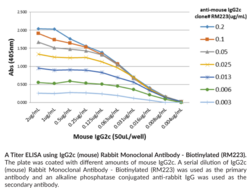
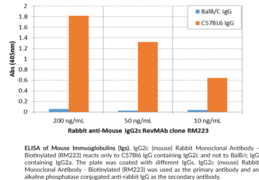
Technical Information
- Immunoglobulin G2c
Shipping & Storage Information
Recommended Products
Certificates of Analysis & Batch Specific Data
Provide batch numbers separated by commas to download or request available product inserts, QC sheets, certificates of analysis, data packs, and GC-MS data.
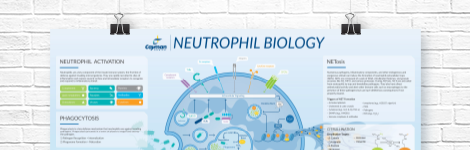
Neutrophil Biology Wall Poster
Explore how neutrophils shape the immune response in health and disease. This poster highlights neutrophil pathogen defense mechanisms, including phagocytosis, degranulation, and NETosis, as well as neutrophil roles in inflammation and NET-associated pathologies.
DOWNLOAD NOWProduct Description
Immunoglobulin G (IgG) is a member of the immunoglobulin superfamily of glycoproteins that plays a central role in the adaptive immune response.1 It is produced by B cells and later secreted by plasma cells and is the most abundant circulating antibody in human and mouse serum.1,2,3 IgG consists of two heavy chains of approximately 50 kDa each and two light chains of approximately 25 kDa each.1 The heavy chains are linked together by disulfide bonds to form an Fc region and also combine with the light chains to form the Fab region, which mediate receptor and antigen binding, respectively.4 IgG is produced following IgM class-switching in response to infection and is involved in numerous humoral host defense responses, including antibody-dependent cell-mediated cytotoxicity (ADCC), toxin neutralization, and pathogen opsonization.2 IgG exists as four isotypes in mice: IgG1, IgG2b, IgG3, and, in a strain-specific manner, IgG2a or IgG2c.5,6 IgG2c is encoded by Ighg2c and is expressed in certain inbred mouse strains, such as C57BL/6, C57BL/10, SJL, and NOD mice.6 Class switching to the IgG2c isotype occurs via IFN-γ stimulation during the early immune response.7 IgG2c binds to the high-affinity Igγ Fc receptor I (FcγRI) on dendritic cells and the low-affinity FcγRIII and FcγRIV, which are expressed on a variety of immune cells, and is involved in complement activation.8,9 Cayman's IgG2c (mouse) Rabbit Monoclonal Antibody - Biotinylated (RM223) can be used for ELISA and Western blot (WB; non-reducing conditions) applications. The antibody recognizes the Fc region of IgG2c from mouse samples.
WARNING This product is not for human or veterinary use.
References & Product Citations
1. Structure and function of immunoglobulins. J. Allergy Clin. Immunol. 125(2 Suppl. 2), S41-S52 (2010).
2. IgG subclasses and allotypes: From structure to effector functions. Front. Immunol. 5, 520 (2014).
3. IgG subclass expression by human B lymphocytes and plasma cells: B lymphocytes precommitted to IgG subclass can be preferentially induced by polyclonal mitogens with T cell help. J. Immunol. 130(2), 671-677 (1983).
4. Immunoglobulin. 2020, (2020).
5. IgG subclass co-
6. The need for IgG2c specific antiserum when isotyping antibodies from C57BL/6 and NOD mice. J. Immunol. Methods 212(2), 187-192 (1998).
7. B cell intrinsic MyD88 signals drive IFN-
8. Cγ1 deficiency exacerbates collagen-
9. Properties of mouse and human IgG receptors and their contribution to disease models. Blood 119(24), 5640-5649 (2012).
Contact Info
Cayman Chemical1180 East Ellsworth RoadAnn Arbor, Michigan 48108 USAToll Free: (800) 364-9897(USA and Canada only)Fax: (734) 971-3640


