
Technical Support & Resources
Visit our FAQ
Contact Us
Toll Free Phone (USA and Canada Only): (888) 526-5351
Direct Phone: (734) 975-3888
Product Categories
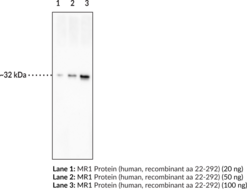
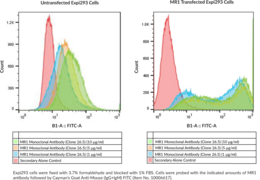
Technical Information
- Class I Histocompatibility Antigen-like Protein
- Major Histocompatibility Complex Class I-related Gene Protein
- MHC Class I-related Gene Protein
Shipping & Storage Information
Recommended Products
Certificates of Analysis & Batch Specific Data
Provide batch numbers separated by commas to download or request available product inserts, QC sheets, certificates of analysis, data packs, and GC-MS data.
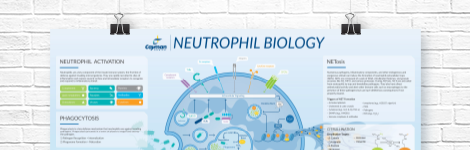
Neutrophil Biology Wall Poster
Explore how neutrophils shape the immune response in health and disease. This poster highlights neutrophil pathogen defense mechanisms, including phagocytosis, degranulation, and NETosis, as well as neutrophil roles in inflammation and NET-associated pathologies.
DOWNLOAD NOWProduct Description
Major histocompatibility complex class I-related gene protein (MR1) is a non-polymorphic MHC class Ib antigen-presenting cell surface molecule that is required for T cell receptor-mediated activation of mucosal-associated invariant T (MAIT) cells.1,2 It is composed of α1 and α2 domains, which form an antigen-binding pocket, and an α3 domain that interacts with β2-microglobulin.2 MR1 mRNA is ubiquitously expressed and, following translation, MR1 protein is localized to the endoplasmic reticulum in a partially folded state. Upon binding of a riboflavin-derived microbial antigen, MR1 undergoes a conformational change and translocates to the cell surface where it induces MAIT cell activation via an interaction with the MAIT cell T cell receptor and activates various immunomodulatory effects, including cytokine release, initiation of adaptive immune responses, and promotion of tissue repair.3 Cayman’s MR1 Monoclonal Antibody (Clone 26.5) can be used for flow cytometry (FC), immunoprecipitation (mass spec confirmed) (IP), and Western blot (WB) applications. The antibody recognizes MR1 from human, bovine, mouse, and rat samples.
WARNING This product is not for human or veterinary use.
References & Product Citations
1. Expression and trafficking of MR1. Immunology 151(3), 270-279 (2017).
2. Structure and function of the non-
3. Understanding and modulating the MR1 metabolite antigen presentation pathway. Mol. Immunol. 129, 121-126 (2021).
Contact Info
Cayman Chemical1180 East Ellsworth RoadAnn Arbor, Michigan 48108 USAToll Free: (800) 364-9897(USA and Canada only)Fax: (734) 971-3640


