
Technical Support & Resources
Visit our FAQ
Contact Us
Toll Free Phone (USA and Canada Only): (888) 526-5351
Direct Phone: (734) 975-3888
Product Categories
Product Type
Application
Technical Information
- GAC
- GAM
- GLS
- K-glutaminase
- Glutaminase Kidney Isoform Mitochondrial
- Glutaminase Transcript Variant 1
- KGA
- L-glutamine Amidohydrolase
Shipping & Storage Information
Recommended Products
Certificates of Analysis & Batch Specific Data
Provide batch numbers separated by commas to download or request available product inserts, QC sheets, certificates of analysis, data packs, and GC-MS data.

Visit Our Cancer Resource Center
Find Tools & Resources to Study the Hallmarks of Cancer
- Cancer cell signaling & regulation
- Cancer metabolism
- Tumor microenvironment
Product Description
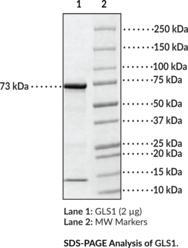
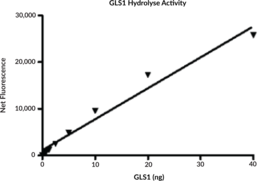
Glutaminase 1 (GLS1) is a mitochondrial enzyme that catalyzes the catabolism of glutamine to glutamate and ammonia.1,2 Alternative transcription of GLS, the gene encoding GLS1, produces two isozymes: kidney (K-type) glutaminase (KGA) and glutaminase C (GAC), which are expressed in kidney, brain, intestine, and fetal liver tissues.1 GLS expression is increased in multiple cancer types, including colorectal, prostate, and breast, and is associated with poor prognosis in ovarian, breast, gastric, and head and neck cancers.3 GLS1 is also essential to T helper 17 (Th17) cell differentiation, and pharmacologic inhibition of GLS1 ameliorates disease symptoms in mouse models of lupus, experimental autoimmune encephalomyelitis, and psoriasis.4,5 Cayman’s GLS1 (human, recombinant) protein can be used for enzyme activity assays.
WARNING This product is not for human or veterinary use.
References & Product Citations
1. Regulation of glutaminase activity and glutamine metabolism. Annu. Rev. Nutr. 15, 133-159 (1995).
2. Glutaminase isoenzymes as key regulators in metabolic and oxidative stress against cancer. Curr. Mol. Med. 13(4), 514-534 (2013).
3. Targeting GLS1 to cancer therapy through glutamine metabolism. Clin. Transl. Oncol. 23(11), 2253-2268 (2021).
4. Glutaminase 1 inhibition reduces glycolysis and ameliorates lupus-
5. GLS1-
Contact Info
Cayman Chemical1180 East Ellsworth RoadAnn Arbor, Michigan 48108 USAToll Free: (800) 364-9897(USA and Canada only)Fax: (734) 971-3640


