
Technical Support & Resources
Visit our FAQ
Contact Us
Toll Free Phone (USA and Canada Only): (888) 526-5351
Direct Phone: (734) 975-3888
Product Categories
Technical Information
- Transcription Factor Sox2
Shipping & Storage Information
Recommended Products
Certificates of Analysis & Batch Specific Data
Provide batch numbers separated by commas to download or request available product inserts, QC sheets, certificates of analysis, data packs, and GC-MS data.

Visit Our Cancer Resource Center
Find Tools & Resources to Study the Hallmarks of Cancer
- Cancer cell signaling & regulation
- Cancer metabolism
- Tumor microenvironment
Product Description
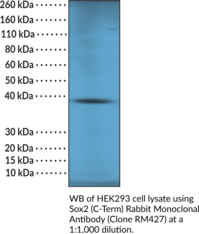
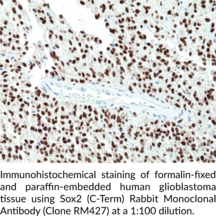
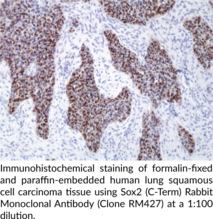
Sox2 is a transcription factor and member of the SoxB1 group of Sox proteins.1 It is composed of an N-terminal domain, an HMG domain responsible for DNA binding, and a C-terminal transactivation domain.2 Sox2 is expressed in pluripotent blastocyst cells, ectodermal, endodermal, and mesodermal cells and the tissues derived from them, primordial germ cells, and stem and progenitor cells in adult organisms, including in the neurogenic regions of the adult brain.1 It is involved in neural commitment, organ specification, hair follicle differentiation, and osteoblast proliferation during development either directly or by indirectly inhibiting other transcriptional regulators. Sox2 is required for the maintenance of neural stem cells (NSCs) in the subgranular zone of the adult hippocampal dentate gyrus.3 It has been used as a reprogramming factor in the generation of induced neural stem cells (iNSC) from fibroblasts and, in combination with the transcription factors Klf4, Oct4, and c-Myc, in the generation of induced pluripotent stem cells (iPSCs) from fibroblasts.1 Heterozygous mutations for SOX2 are associated with anophthalmia-esophageal-genital (AEG) syndrome, a disorder characterized by anophthalmia or microphthalmia, fistula between the trachea and esophagus, and brain abnormalities.1,2 Gene amplification of SOX2 has been found in patients with glioblastoma, lung cancers, sinonasal cancer, and squamous cell carcinomas and is associated with favorable prognosis, relapse, or metastasis depending on the cancer type.2 Cayman’s Sox2 (C-Term) Rabbit Monoclonal Antibody (Clone RM427) can be used for immunohistochemistry (IHC) and Western blot (WB) applications.
WARNING This product is not for human or veterinary use.
References & Product Citations
1. The sox family of transcription factors: Versatile regulators of stem and progenitor cell fate. Cell Stem Cell 12(1), 15-30 (2013).
2. SOX2 and cancer: Current research and its implications in the clinic. Clin. Transl. Med. 3, 19 (2014).
3. Hippocampal development and neural stem cell maintenance require Sox2-
Contact Info
Cayman Chemical1180 East Ellsworth RoadAnn Arbor, Michigan 48108 USAToll Free: (800) 364-9897(USA and Canada only)Fax: (734) 971-3640


