
Technical Support & Resources
Visit our FAQ
Contact Us
Toll Free Phone (USA and Canada Only): (888) 526-5351
Direct Phone: (734) 975-3888
Product Categories
Technical Information
- MAPTL
- Microtubule-associated Protein Tau
- MTBT2
- Neurofibrillary Tangle Protein
- Paired Helical Filament Tau
Shipping & Storage Information
Recommended Products
Certificates of Analysis & Batch Specific Data
Provide batch numbers separated by commas to download or request available product inserts, QC sheets, certificates of analysis, data packs, and GC-MS data.
Product Description
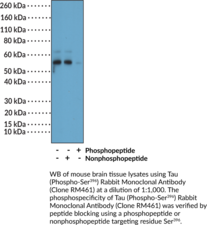
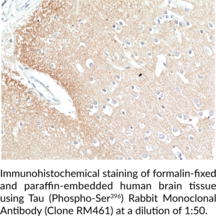
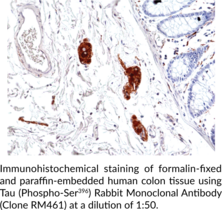
Tau is a member of the microtubule-associated protein (MAP) family that facilitates microtubule formation in axons.1,2 It is primarily expressed in neurons and localized to axons but trace amounts have been observed in glial cells and several peripheral tissues including kidney, lung, and testis. Tau is composed of an N-terminal projection domain that interacts with neurofilaments, cytoplasmic organelles, and neuronal cell membranes and a C-terminal microtubule binding domain that facilitates microtubule polymerization and stabilization. It is encoded by MAPT in humans, a 16-exon gene that produces 6 isoforms via alternative mRNA splicing. Mutations in MAPT lead to changes in expression of tau isoforms and the formation of insoluble protein aggregates that cause familial frontotemporal dementia (FTD) and parkinsonism linked to chromosome 17 (FTDP-17).3 Tau is subject to post-translational modifications, including phosphorylation, and hyperphosphorylation of tau at serine 396 (phospho-Ser396) is associated with the formation of neurofibrillary tangles and neuronal cell death in postmortem brains from patients with Alzheimer’s disease and various mouse models of Alzheimer’s disease.3,4,5 Cayman’s Tau (Phospho-Ser396) Rabbit Monoclonal Antibody (Clone RM461) can be used for immunohistochemistry (IHC) and Western blot applications.
WARNING This product is not for human or veterinary use.
References & Product Citations
1. Tau protein isoforms, phosphorylation and role in neurodegenerative disorders. Brain Res. Rev. 33(1), 95-130 (2000).
2. Tau and tauopathies. Brain Res. Bull. 126(Pt 3), 238-292 (2016).
3. Tau protein in neurodegenerative diseases -
4. Tau antibody structure reveals a molecular switch defining a pathological conformation of the tau protein. Sci. Rep. 8(1), 6209 (2018).
5. Novel phosphorylation sites in tau from Alzheimer brain support a role for casein kinase 1 in disease pathogenesis. The Journal of Biological Chemisty 282(32), 23645-23654 (2007).
Contact Info
Cayman Chemical1180 East Ellsworth RoadAnn Arbor, Michigan 48108 USAToll Free: (800) 364-9897(USA and Canada only)Fax: (734) 971-3640


