
Technical Support & Resources
Visit our FAQ
Contact Us
Toll Free Phone (USA and Canada Only): (888) 526-5351
Direct Phone: (734) 975-3888
Product Categories
Product Type
Research Area
Application
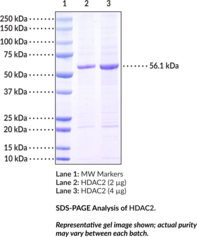
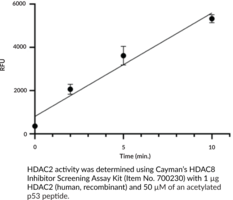
Technical Information
- Histone Deacetylase 2
Shipping & Storage Information
Recommended Products
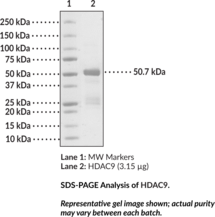
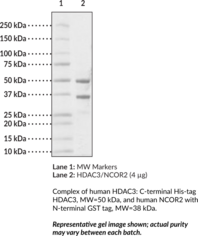
Certificates of Analysis & Batch Specific Data
Provide batch numbers separated by commas to download or request available product inserts, QC sheets, certificates of analysis, data packs, and GC-MS data.
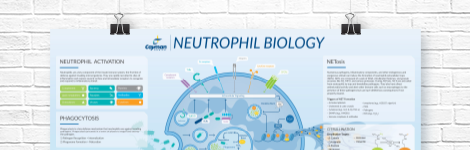
Neutrophil Biology Wall Poster
Explore how neutrophils shape the immune response in health and disease. This poster highlights neutrophil pathogen defense mechanisms, including phagocytosis, degranulation, and NETosis, as well as neutrophil roles in inflammation and NET-associated pathologies.
DOWNLOAD NOWProduct Description
Histone deacetylase 2 (HDAC2) is a class I HDAC that catalyzes the zinc-dependent deacetylation of core histones.1,2 It is primarily localized to the nucleus and is found in all human cell lines and tissues. HDAC2 is a component of various histone deacetylation and corepressor complexes with diverse roles in chromatin manipulation and the regulation of gene expression.3 It exhibits low enzymatic activity when in isolation, which increases greatly upon its incorporation into gene expression regulatory complexes. Dysregulation of HDAC2 is associated with various diseases, including cancer, Alzheimer’s disease, stroke, and alcohol addiction.3,4,5,6 HDAC2 binds to the severe acute respiratory syndrome coronavirus 2 (SARS-CoV-2) main protease (Mpro), also known as 3C-like protease (3CLpro).7 Cayman’s HDAC2 (human, recombinant) protein can be used for enzyme activity assays.
WARNING This product is not for human or veterinary use.
References & Product Citations
1. Targeting histone deacetylase in cancer therapy. Med. Res. Rev. 26(4), 397-413 (2006).
2. Targeting histone deacetylases for the treatment of cancer and inflammatory diseases. J. Cell. Physiol. 209(3), 611-616 (2006).
3. Erasers of histone acetylation: The histone deacetylase enzymes. Cold Spring Harb. Perspect. Biol. 16(4), a018713 (2014).
4. HDAC2 dysregulation in the nucleus basalis of Meynert during the progression of Alzheimer’s disease. Neuropathol. Appl. Neurobiol. 45(4), 380-397 (2019).
5. Inhibiting histone deacetylase 2 (HDAC2) promotes functional recovery from stroke. J. Am. Heart Assoc. 6(10), e007236 (2017).
6. Epigenetic bases of the dark side of alcohol addiction. Neuropharmacology 122, 74-84 (2017).
7. A SARS-
Contact Info
Cayman Chemical1180 East Ellsworth RoadAnn Arbor, Michigan 48108 USAToll Free: (800) 364-9897(USA and Canada only)Fax: (734) 971-3640


