
Technical Support & Resources
Visit our FAQ
Contact Us
Toll Free Phone (USA and Canada Only): (888) 526-5351
Direct Phone: (734) 975-3888
Product Categories
Technical Information
- B Cell Receptor CD22
- B-lymphocyte Cell Adhesion Molecule
- BL-CAM
- Sialic Acid-binding Ig-like Lectin 2
- Siglec-2
- T Cell Surface Antigen Leu-14
Shipping & Storage Information
Recommended Products
Certificates of Analysis & Batch Specific Data
Provide batch numbers separated by commas to download or request available product inserts, QC sheets, certificates of analysis, data packs, and GC-MS data.

Visit Our Cancer Resource Center
Find Tools & Resources to Study the Hallmarks of Cancer
- Cancer cell signaling & regulation
- Cancer metabolism
- Tumor microenvironment
Product Description
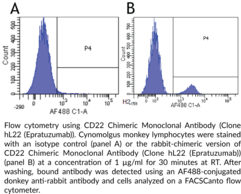
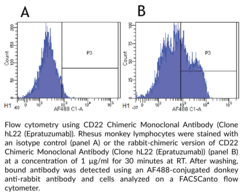
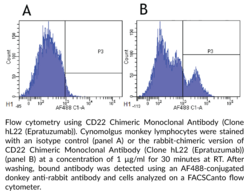
CD22 is a transmembrane receptor and member of the sialic acid-binding immunoglobulin-type (Ig-type) lectin (SIGLEC) family.1,2 It is composed of N-terminal extracellular Ig-like variable (IgV) and Ig-like constant 2 (IgC2) domains, a membrane-spanning region, and an intracellular immunoreceptor tyrosine-based inhibitory motif (ITIM) domain. CD22 has two isoforms formed via alternative splicing, CD22β, which is the full-length form and contains six IgC2 domains, and CD22α, which lacks the third and fourth IgC2 domains. It is expressed in the cytosol of premature B cells and on the cell surface of resting and activated B lymphocytes but is not expressed in differentiated B cells.3 CD22 is an inhibitory receptor activated by binding of α2,6-linked sialic acid-containing molecules, such as glycoproteins, which stimulates phosphorylation of tyrosine in the ITIM domain, leading to recruitment of Src homology 2 domain-containing phosphatases (SHPs), including SHP-1, spleen tyrosine kinase (Syk), LYN, and PI3K.1,2 Knockout of Cd22 decreases IgG1 titers in mice immunized with OVA/alum and expression of human CD22 in Cd22 -/- mice rescues this phenotype.4 CD22 is overexpressed in cancer cells isolated from patients with hairy cell leukemia.3 Cayman’s CD22 Chimeric Monoclonal Antibody (Clone hL22 (Epratuzumab)) was produced recombinantly from the humanized EPB-2/LL2 antibody sequence and can be used for flow cytometry (FC) and immunoprecipitation (IP) applications. The humanized EPB-2/LL2 antibody was generated by fusing human IgG1 constant domains to the antigen-binding domain of the anti-CD22 mouse monoclonal antibody, EPB-2/mLL2.5,6
WARNING This product is not for human or veterinary use.
References & Product Citations
1. CD22: A regulator of innate and adaptive B cell responses and autoimmunity. Front. Immunol. 9, 2235 (2018).
2. CD22, a B lymphocyte-
3. HD39 (B3), a B lineage-
4. Human CD22 inhibits murine B cell receptor activation in a human CD22 transgenic mouse model. J. Immunol. 199(9), 3116-3128 (2017).
5. Two new monoclonal antibodies, EPB-
6. Construction and characterization of a humanized, internalizing, B-
Contact Info
Cayman Chemical1180 East Ellsworth RoadAnn Arbor, Michigan 48108 USAToll Free: (800) 364-9897(USA and Canada only)Fax: (734) 971-3640


