
Technical Support & Resources
Visit our FAQ
Contact Us
Toll Free Phone (USA and Canada Only): (888) 526-5351
Direct Phone: (734) 975-3888
Product Categories
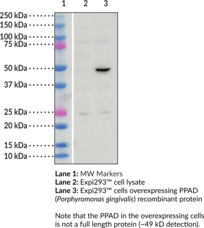
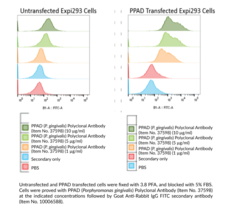
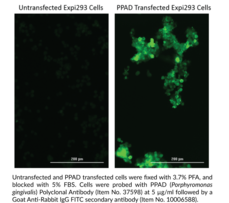
Technical Information
- P. gingivalis Peptidylarginine Deiminase
Shipping & Storage Information
Recommended Products
Certificates of Analysis & Batch Specific Data
Provide batch numbers separated by commas to download or request available product inserts, QC sheets, certificates of analysis, data packs, and GC-MS data.
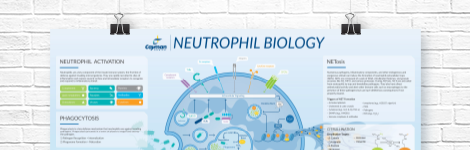
Neutrophil Biology Wall Poster
Explore how neutrophils shape the immune response in health and disease. This poster highlights neutrophil pathogen defense mechanisms, including phagocytosis, degranulation, and NETosis, as well as neutrophil roles in inflammation and NET-associated pathologies.
DOWNLOAD NOWProduct Description
Porphyromonas gingivalis (P. gingivalis) peptidyl arginine deiminase (PPAD) is a bacterial enzyme and virulence factor secreted by P. gingivalis, an oral bacterium involved in the progression of periodontal disease.1,2 It is composed of a pro-peptide sequence, a catalytic domain, an immunoglobulin-like (Ig-like) domain, and a C-terminal domain, but the mature protein contains only the catalytic domain and Ig-like domain.2 It is expressed on the bacterial outer membrane. PPAD and proteolytic enzymes, such as arginine gingipain (RgpB), are released from P. gingivalis to break down proteins, which it uses as an energy source.1,2 RgpB cleaves proteins at arginine residues, and PPAD specifically deiminates the resulting C-terminal arginine residues of both bacterial and host proteins to citrulline, a process known as citrullination.1,3,2 Unlike mammalian PADs, PPAD does not require calcium and can convert free L-arginine into L-citrulline in addition to deiminating these residues at the C-terminus of proteins and peptides.4 A ppad deletion mutation (Δ8820) in P. gingivalis strain 381 increases biofilm formation, alters biofilm architecture, and induces the secretion of protein aggregates.1 Mice infected with a PPAD deficient strain of P. gingivalis have reduced periodontal inflammation and similarly infected mice in a model of collagen-induced arthritis have reduced bone erosion.5 Cayman’s PPAD (Porphyromonas gingivalis) Polyclonal Antibody can be used for ELISA, flow cytometry (FC), immunofluorescence (IF), and Western blot (WB) applications. The expected WB detection size is approximately 62 kDa from P. gingivalis samples.
WARNING This product is not for human or veterinary use.
References & Product Citations
1. Citrullination mediated by PPAD constrains biofilm formation in P. gingivalis strain 381. NPJ Biofilms Microbiomes 5(1), 7 (2019).
2. Crystal structure of Porphyromonas gingivalis peptidylarginine deiminase: Implications for autoimmunity in rheumatoid arthritis. Ann. Rheum. Dis. 75(6), 1255-1261 (2016).
3. Citrullination as a plausible link to periodontitis, rheumatoid arthritis, atherosclerosis and Alzheimer’s disease. J. Oral Microbiol. 10(1), 1487742 (2018).
4. Rheumatoid arthritis-
5. Porphyromonas gingivalis peptidylarginine deiminase, a key contributor in the pathogenesis of experimental periodontal disease and experimental arthritis. PLoS One 9(6), e100838 (2014).
Contact Info
Cayman Chemical1180 East Ellsworth RoadAnn Arbor, Michigan 48108 USAToll Free: (800) 364-9897(USA and Canada only)Fax: (734) 971-3640


