
Technical Support & Resources
Visit our FAQ
Contact Us
Toll Free Phone (USA and Canada Only): (888) 526-5351
Direct Phone: (734) 975-3888
Product Categories
Application
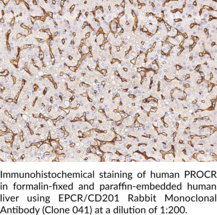
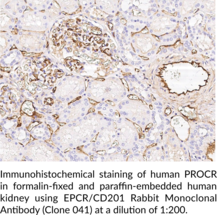
Technical Information
- Activated Protein C Receptor
- APC Receptor
- Endothelial Cell Protein C Receptor
- Endothelial Protein C Receptor
- PROCR
- Protein C Receptor
Shipping & Storage Information
Recommended Products
Certificates of Analysis & Batch Specific Data
Provide batch numbers separated by commas to download or request available product inserts, QC sheets, certificates of analysis, data packs, and GC-MS data.

Visit Our Cancer Resource Center
Find Tools & Resources to Study the Hallmarks of Cancer
- Cancer cell signaling & regulation
- Cancer metabolism
- Tumor microenvironment
Product Description
Endothelial protein C receptor (EPCR), also known as CD201, is a type I transmembrane glycoprotein involved in coagulation and hemostasis, cytoprotection, and innate immunity.1 It is composed of a signal peptide, α1 and α2 domains, which share homology with CD1d and bind to phosphatidylcholine, a transmembrane domain, and a cytoplasmic tail.2,3 EPCR is expressed on the surface of endothelial cells and can be cleaved by disintegrin and metalloproteinase domain-containing protein 17 (ADAM17/TACE) to release soluble EPCR, which is a process known as shedding and is induced by thrombin and pro-inflammatory mediators, including IL-1β, TNF-α, and phorbol esters.3,4 Binding of protein C to EPCR facilitates its activation by the thrombin-thrombomodulin complex, which can then inactivate factor Va and factor VIIIa to promote anticoagulation, and EPCR-associated activated protein C cleaves proteinase-activated receptor 1 (PAR1) to initiate cytoprotective signaling.3 EPCR is also involved in inflammation, malaria pathogenesis, and cancer metastasis.1 Knockout of EPCR protects against needle-induced joint bleeding in a mouse model of hemophilia A.5 SNPs in EPCR are associated with venous thromboembolism (VTE).6 Cayman’s EPCR/CD201 Rabbit Monoclonal Antibody (Clone 041) can be used for immunohistochemistry paraffin (IHC-P).
WARNING This product is not for human or veterinary use.
References & Product Citations
1. Endothelial cell protein C receptor: A multiliganded and multifunctional receptor. Blood 124(10), 1553-1562 (2014).
2. Structural and functional implications of the intron/exon organization of the human endothelial cell protein C/activated protein C receptor (EPCR) gene: Comparison with the structure of CD1/major histocompatibility complex α1 and α2 domains. Blood 94(2), 632-641 (1999).
3. Mechanisms of anticoagulant and cytoprotective actions of the protein C pathway. J. Thromb. Haemost. 11(Suppl. 1), 242-253 (2013).
4. Identification, cloning, and regulation of a novel endothelial cell protein C/activated protein C receptor. The Journal of Biological Chemisty 269(42), 26486-26491 (1994).
5. EPCR deficiency or function-
6. The endothelial protein C receptor (PROCR) Ser219Gly variant and risk of common thrombotic disorders: A HuGE review and meta-
Contact Info
Cayman Chemical1180 East Ellsworth RoadAnn Arbor, Michigan 48108 USAToll Free: (800) 364-9897(USA and Canada only)Fax: (734) 971-3640


