
Technical Support & Resources
Visit our FAQ
Contact Us
Toll Free Phone (USA and Canada Only): (888) 526-5351
Direct Phone: (734) 975-3888
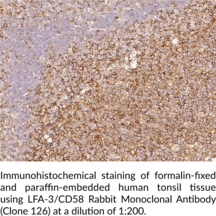
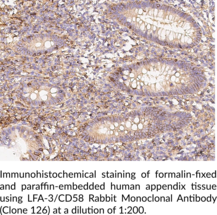
Technical Information
- Ag3
- Lymphocyte Function Antigen 3
- Lymphocyte Function-associated Antigen 3
- Surface Glycoprotein LFA-3
Shipping & Storage Information
Recommended Products
Certificates of Analysis & Batch Specific Data
Provide batch numbers separated by commas to download or request available product inserts, QC sheets, certificates of analysis, data packs, and GC-MS data.

Visit Our Cancer Resource Center
Find Tools & Resources to Study the Hallmarks of Cancer
- Cancer cell signaling & regulation
- Cancer metabolism
- Tumor microenvironment
Product Description
Lymphocyte function-associated antigen 3 (LFA-3), also known as CD58, is a membrane-associated glycoprotein.1 It exists as two isoforms: a type I transmembrane glycoprotein involved in signal transduction and a glycosylphosphatidylinositol-anchored (GPI-anchored) form primarily involved in cell adhesion.1,2 A soluble form of LFA-3, sCD58, also exists.1 Transmembrane LFA-3 is composed of an N-terminal extracellular domain containing N-linked glycosylation sites, a transmembrane domain, and a short C-terminal cytoplasmic tail. The GPI-anchored form is located extracellularly and is linked to the plasma membrane via the C-terminus. LFA-3 is expressed broadly on hematopoietic and non-hematopoietic cells and its ligand, CD2, is expressed on T cells, natural killer (NK) cells, thymocytes, and certain bone marrow cells. LFA-3 acts as a co-stimulatory receptor that, when bound by CD2 on the surface of T cells, is part of the immunological synapse and induces T cell activation. It is also involved in thymocyte development and NK cell communication, as well as other immune and non-immune functions. sCD58 disrupts cell-cell adhesion and has immunosuppressive effects. Various SNPs in CD58 are associated with an increased risk of multiple sclerosis with one SNP potentially conferring a protective effect.3,4 The expression of CD58 is increased or decreased in various cancers with increased expression positively correlated with overall survival and disease-free survival in patients with acute myeloid leukemia (AML).1 Cayman’s LFA-3/CD58 Rabbit Monoclonal Antibody (Clone 126) can be used for immunohistochemistry paraffin (IHC-P).
WARNING This product is not for human or veterinary use.
References & Product Citations
1. CD58 immunobiology at a glance. Front. Immunol. 12, 705260 (2021).
2. Anchoring mechanisms for LFA-
3. Susceptibility variants in the CD58 gene locus point to a role of microRNA-
4. The role of the CD58 locus in multiple sclerosis. Proc. Natl. Acad. Sci. USA 106(13), 5264-5269 (2009).
Contact Info
Cayman Chemical1180 East Ellsworth RoadAnn Arbor, Michigan 48108 USAToll Free: (800) 364-9897(USA and Canada only)Fax: (734) 971-3640


