
Technical Support & Resources
Visit our FAQ
Contact Us
Toll Free Phone (USA and Canada Only): (888) 526-5351
Direct Phone: (734) 975-3888
Product Categories
Technical Information
- CAR
- Coxsackievirus and Adenovirus Receptor
- CXADR Ig-like Adhesion Molecule
Shipping & Storage Information
Recommended Products
Certificates of Analysis & Batch Specific Data
Provide batch numbers separated by commas to download or request available product inserts, QC sheets, certificates of analysis, data packs, and GC-MS data.

Neutrophil Biology Wall Poster
Explore how neutrophils shape the immune response in health and disease. This poster highlights neutrophil pathogen defense mechanisms, including phagocytosis, degranulation, and NETosis, as well as neutrophil roles in inflammation and NET-associated pathologies.
DOWNLOAD NOWProduct Description
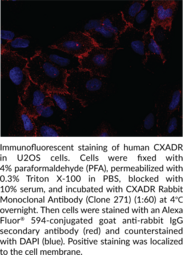
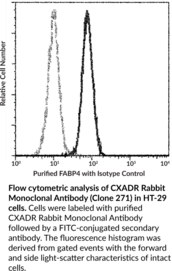
Coxsackievirus and adenovirus receptor (CXADR) is a type I transmembrane glycoprotein with roles in forming cellular tight junctions, spermatogenesis, and viral infection.1,2 Alternative splicing of CXADR generates three soluble isoforms, CXADR4/7, CXADR3/7, and CXADR2/7, and two membrane-bound isoforms, CXADR1 and CXADR2.1 Membrane-bound isoforms of CXADR are composed of an extracellular domain containing two immunoglobulin-like (Ig-like) domains, a transmembrane domain, and an intracellular domain, which varies by isoform, is subject to post-translational modification, and contains a PDZ-binding motif, clathrin-adaptor protein recognition motif, and sorting motif. They function as major viral receptors for adenovirus species A and C-G and group B coxsackieviruses. Soluble isoforms of CXADR lack the transmembrane domain but also interact with both coxsackieviruses and adenoviruses. CXADR also functions as a cell junction component, interacting with various tight and adherens junction proteins to regulate barrier permeability, cell adhesion, and cell migration. Knockdown of CXADR in Sertoli cells compromises the blood-testis barrier, as well as induces germ cell apoptosis and premature loss of spermatids in mice.3 Endomyocardial CXADR expression is increased and positively correlated with IL-6 levels in patients with dilated cardiomyopathy.4 Cayman’s CXADR Rabbit Monoclonal Antibody (Clone 271) can be used for ELISA, flow cytometry (FC), immunocytochemistry (ICC), and immunofluorescence (IF) applications.
WARNING This product is not for human or veterinary use.
References & Product Citations
1. Molecular Mechanisms in Spermatogenesis. Advances in Experimental Medicine and Biology 1381, (2022).
2. Characterization of a novel species of adenovirus from Japanese microbat and role of CXADR as its entry factor. Sci. Rep. 9(1), 573 (2019).
3. CXADR: From an essential structural component to a vital signaling mediator in spermatogenesis. Int. J. Mol. Sci. 24(2), 1288 (2023).
4. Implication of inflammation on Coxsackie virus and Adenovirus receptor expression on cardiomyocytes and the role of platelets in patients with dilated cardiomyopathy. Cardiovasc. Pathol. 60, 107452 (2022).
Contact Info
Cayman Chemical1180 East Ellsworth RoadAnn Arbor, Michigan 48108 USAToll Free: (800) 364-9897(USA and Canada only)Fax: (734) 971-3640


