
Technical Support & Resources
Visit our FAQ
Contact Us
Toll Free Phone (USA and Canada Only): (888) 526-5351
Direct Phone: (734) 975-3888
Product Categories
Research Area

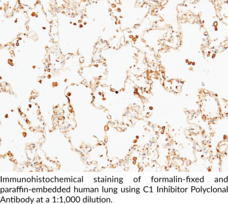
Technical Information
- C1 Esterase Inhibitor
- C1-INH
- Plasma Protease C1 Inhibitor
- Serine Protease Inhibitor Family G1
- Serpin G1
Shipping & Storage Information
Recommended Products
Certificates of Analysis & Batch Specific Data
Provide batch numbers separated by commas to download or request available product inserts, QC sheets, certificates of analysis, data packs, and GC-MS data.
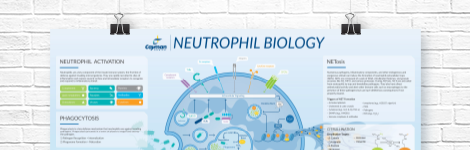
Neutrophil Biology Wall Poster
Explore how neutrophils shape the immune response in health and disease. This poster highlights neutrophil pathogen defense mechanisms, including phagocytosis, degranulation, and NETosis, as well as neutrophil roles in inflammation and NET-associated pathologies.
DOWNLOAD NOWProduct Description
Plasma protease C1 inhibitor (C1 inhibitor) is a secreted plasma glycoprotein and member of the serine protease inhibitor (SERPIN) family.1,2 It is composed of an N-terminal domain and a serpin domain, which contains a reactive center loop (RCL).2 The RCL of C1 inhibitor mimics the target protease substrates and, upon cleavage, inactivates proteases via an irreversible covalent bond with the protease active site serine. C1 inhibitor targets several serine proteases, including complement 1r (C1r) and C1s, Factor XII, thrombin, and plasmin. It is involved in vascular permeability, extracellular matrix interactions, recognition of pathogens such as bacteria and parasites, ischemia-reperfusion injury, and transplant rejection. Knockout of the gene encoding C1 inhibitor, Serping1, increases vascular permeability in mice.3 Mutations in SERPING1 are associated with hereditary angioedema (HAE), and plasma levels of C1 inhibitor are increased in patients with COVID-19.4,5 Formulations containing recombinant human C1 inhibitor have been used in the prophylaxis of angioedema attacks. Cayman’s C1 Inhibitor Polyclonal Antibody can be used for ELISA, immunohistochemistry paraffin (IHC-P), and Western blot (WB) applications. The antibody recognizes C1 inhibitor at 56 kDa from human samples.
WARNING This product is not for human or veterinary use.
References & Product Citations
1. Crucial residues in the carboxy-
2. C1 inhibitor, a multi-
3. Increased vascular permeability in C1 inhibitor-
4. Mutational spectrum and geno-
5. C1 esterase inhibitor-
Contact Info
Cayman Chemical1180 East Ellsworth RoadAnn Arbor, Michigan 48108 USAToll Free: (800) 364-9897(USA and Canada only)Fax: (734) 971-3640


