
Technical Support & Resources
Visit our FAQ
Contact Us
Toll Free Phone (USA and Canada Only): (888) 526-5351
Direct Phone: (734) 975-3888
Product Categories
Application
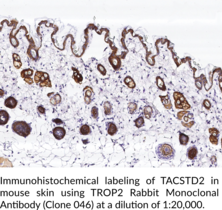
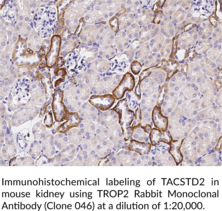
Technical Information
- Cell Surface Glycoprotein TROP-2
- Membrane Component 1 Surface Marker 1
- M1S1
- TACSTD2
- Trophoblast Cell Surface Antigen 2
- Tumor-Associated Calcium Signal Transducer 2
Shipping & Storage Information
Recommended Products
Certificates of Analysis & Batch Specific Data
Provide batch numbers separated by commas to download or request available product inserts, QC sheets, certificates of analysis, data packs, and GC-MS data.

Visit Our Cancer Resource Center
Find Tools & Resources to Study the Hallmarks of Cancer
- Cancer cell signaling & regulation
- Cancer metabolism
- Tumor microenvironment
Product Description
Trophoblast cell surface antigen 2 (TROP2), also known as tumor-associated calcium signal transducer 2 (TACSTD2), is a transmembrane glycoprotein and epithelial cell adhesion molecule (EpCAM) family member.1,2 It is composed of a signal peptide, an extracellular domain, which contains a cysteine-rich domain, thyroglobulin type-I domain, putative EGF-like domain, and cysteine-poor domain, a transmembrane domain, and a cytoplasmic tail, which contains a HIKE domain, PKC phosphorylation site, and a PtdIns-(4,5)-P2 (PIP2) binding site. Tacstd2 is expressed in trophoblasts, kidney, lung, ovary, and testis and localizes to the cell membrane and cytoplasm.3,4,1,5 TROP2 is involved in embryonic and fetal development, cell adhesion, migration, and proliferation and interacts with β-catenin, α5β1 integrin, and insulin-like growth factor 1 (IGF-1), among others.1 TROP2 is highly expressed in various cancer tissues, and overexpression of TACSTD2 increases metastasis in a colon cancer mouse xenograft model.1,6 Loss-of-function mutations in TACSTD2 result in gelatinous drop-like corneal dystrophy.5 Formulations containing an antibody-drug conjugate targeting TROP2 have been used in the treatment of triple-negative breast cancer (TNBC) and urothelial cancer. Cayman’s TROP2 Rabbit Monoclonal Antibody (Clone 046) can be used for immunohistochemistry (IHC; paraffin).
WARNING This product is not for human or veterinary use.
References & Product Citations
1. Trop2: From development to disease. Dev. Dyn. 244(2), 99-109 (2014).
2. Trop2: Jack of all trades, master of none. Cancers (Basel) 12(11), 3328 (2020).
3. Human trophoblast cell-
4. Cloning of the murine TROP2 gene: Conservation of a PIP2-
5. Identification of the gene responsible for gelatinous drop-
6. Trop-
Contact Info
Cayman Chemical1180 East Ellsworth RoadAnn Arbor, Michigan 48108 USAToll Free: (800) 364-9897(USA and Canada only)Fax: (734) 971-3640


