
Technical Support & Resources
Visit our FAQ
Contact Us
Toll Free Phone (USA and Canada Only): (888) 526-5351
Direct Phone: (734) 975-3888
Product Categories
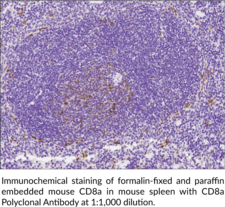
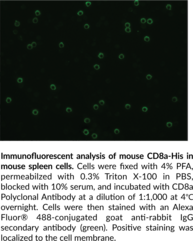
Technical Information
- T Cell Surface Glycoprotein CD8 α-chain
- T Cell Surface Glycoprotein CD8 Alpha Chain
Shipping & Storage Information
Recommended Products
Certificates of Analysis & Batch Specific Data
Provide batch numbers separated by commas to download or request available product inserts, QC sheets, certificates of analysis, data packs, and GC-MS data.
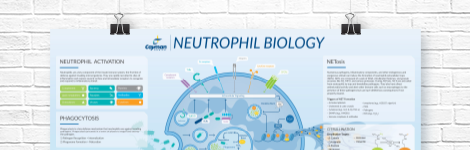
Neutrophil Biology Wall Poster
Explore how neutrophils shape the immune response in health and disease. This poster highlights neutrophil pathogen defense mechanisms, including phagocytosis, degranulation, and NETosis, as well as neutrophil roles in inflammation and NET-associated pathologies.
DOWNLOAD NOWProduct Description
The CD8 α-chain (CD8a) is a transmembrane glycoprotein that exists as a homodimer, CD8αα, or heterodimer with the CD8 β-chain (CD8b), CD8αβ, to form the T cell receptor (TCR) co-receptor CD8.1,2 CD8a is composed of an extracellular immunoglobulin variable-like (IgV) domain, which interacts with MHC class I molecules, a transmembrane domain, and a cytoplasmic tail that associates with the tyrosine kinase p56Ick and mediates signal transduction.1,3,2 CD8αβ is expressed by cytotoxic T lymphocytes (CTLs), where it acts as a TCR co-receptor by enhancing T cell signaling and activation upon binding to antigen-displaying MHC class I molecules.4,2 CD8αα is expressed by CTLs and intestinal epithelial lymphocytes, as well as γδ T, natural killer (NK), and dendritic cells, where it acts as a positive or negative regulator of cell activation in a cell-dependent manner. Cd8a-/- mice infected with M. tuberculosis exhibit reduced survival.5 Cayman's CD8a Polyclonal Antibody can be used for ELISA, immunocytochemistry (ICC), immunofluorescence (IF), and immunohistochemistry (IHC; paraffin) applications.
WARNING This product is not for human or veterinary use.
References & Product Citations
1. The multiple roles of the CD8 coreceptor in T cell biology: Opportunities for the selective modulation of self-
2. Doubting the TCR coreceptor function of CD8αα. Immunity 28(2), 149-159 (2008).
3. CD8β chain influences CD8α chain-
4. CD8αα homodimers function as a coreceptor for KIR3DL1. Proc. Natl. Acad. Sci. USA 115(36), 17951-17956 (2019).
5. Relative contributions of distinct MHC class I-
Contact Info
Cayman Chemical1180 East Ellsworth RoadAnn Arbor, Michigan 48108 USAToll Free: (800) 364-9897(USA and Canada only)Fax: (734) 971-3640


