
Technical Support & Resources
Visit our FAQ
Contact Us
Toll Free Phone (USA and Canada Only): (888) 526-5351
Direct Phone: (734) 975-3888
Product Categories
Research Area
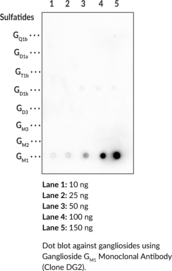
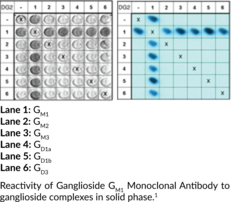
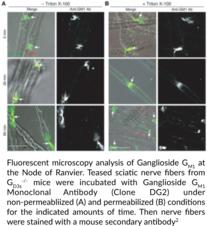
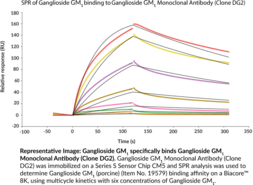
Technical Information
- GM1
- Monosialoganglioside GM1
Shipping & Storage Information
Recommended Products
Certificates of Analysis & Batch Specific Data
Provide batch numbers separated by commas to download or request available product inserts, QC sheets, certificates of analysis, data packs, and GC-MS data.
Lipid Resource Center
Discover Products & Resources for Lipid Research
- High-purity lipid standards
- Lipid roles in biology
- Lipids in health & disease
- Lipids for pharmaceutical development
- Protocols, advice, & resources
Product Description
Ganglioside GM1 is a monosialylated ganglioside and the prototypic ganglioside for those containing one sialic acid residue.1,2 It is found in a large variety of cells, including immune cells and neurons, and is enriched in lipid rafts in the cell membrane.3 It associates with growth factor receptors, including TrkA, TrkB, and the GDNF receptor complex containing Ret and GFRα, and is required for TrkA expression on the cell surface. Ganglioside GM1 interacts with other proteins to increase calcium influx, affecting various calcium-dependent processes, including inducing neuronal outgrowth during differentiation. Ganglioside GM1 acts as a receptor for cholera toxin, which binds to its oligosaccharide group, facilitating toxin cell entry into epithelial cells of the jejunum.4,5 Similarly, it is bound by the heat-labile enterotoxin from E. coli in the pathogenesis of traveler's diarrhea.6 Ganglioside GM1 sensitizes inactivated T cells to TNF-α-induced apoptosis and induces apoptosis of activated T cells even in the absence of TNF-α.7 Ganglioside GM1 is found at higher levels on T cells isolated from patients with renal cell carcinoma (RCC) compared with T cells from patients without cancer. Levels of ganglioside GM1 are decreased in the substantia nigra pars compacta in postmortem brain tissues from patients with Parkinson's disease.3 Ganglioside GM1 gangliosidosis, characterized by a deficiency in ganglioside GM1-β-galactosidase, the enzyme that degrades ganglioside GM1, leads to accumulation of the gangliosides GM1 and GA1 in neurons and can be fatal in infants.1 Cayman's Ganglioside GM1 Monoclonal Antibody (Clone DG2) binds to Ganglioside GM1 (porcine brain) (Item No. 19579) with ka, kd, and KD values of 2,280 M-1s-1, 0.00353 s-1, and 1.81 µM, respectively, as determined by surface plasmon resonance (SPR). It can be used for dot blot, ELISA, immunofluorescence (IF), and TLC immunostaining applications.
WARNING This product is not for human or veterinary use.
References & Product Citations
1. Ganglioside biochemistry. ISRN Biochem. 506160 (2012).
2. Exogenous gangliosides, neuronal plasticity and repair, and the neurotrophins. Cell Mol. Life Sci. 62(19-20), 2283-2294 (2005).
3. The multi-
4. Dissecting the cholera toxin-
5. Cholera toxin binds to lipid rafts but has a limited specificity for ganglioside GM1. Immunol. Cell Biol. 85(5), 378-382 (2007).
6. Structure-
7. GM1 and tumor necrosis factor-
Contact Info
Cayman Chemical1180 East Ellsworth RoadAnn Arbor, Michigan 48108 USAToll Free: (800) 364-9897(USA and Canada only)Fax: (734) 971-3640


