
Technical Support & Resources
Visit our FAQ
Contact Us
Toll Free Phone (USA and Canada Only): (888) 526-5351
Direct Phone: (734) 975-3888
Product Categories
Product Type
Technical Information
- LT-β
- TNF-C
- TNFSF3
- Tumor Necrosis Factor C
- Tumor Necrosis Factor Ligand Superfamily Member 3
Shipping & Storage Information
Recommended Products
Certificates of Analysis & Batch Specific Data
Provide batch numbers separated by commas to download or request available product inserts, QC sheets, certificates of analysis, data packs, and GC-MS data.
Neutrophil Biology Wall Poster
Explore how neutrophils shape the immune response in health and disease. This poster highlights neutrophil pathogen defense mechanisms, including phagocytosis, degranulation, and NETosis, as well as neutrophil roles in inflammation and NET-associated pathologies.
DOWNLOAD NOWProduct Description
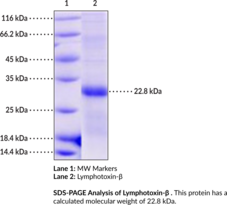
Lymphotoxin-β (LT-β), also known as TNF-C, is a member of the TNF and TNF receptor (TNFR) cytokine superfamily.1 It is a type II transmembrane protein that forms heterotrimers with TNF-β, also known as LT-α, which bind to the LT-β receptor (LT-βR).2,3 LT-β is expressed in T cells, natural killer (NK) cells, B cells, and innate lymphoid cells. Through activation of the LT-βR, LT-β is involved in the development and maintenance of secondary lymphoid organs, as well as the mucosal system, spleen, and bone marrow, host defense, and inflammatory processes.3,4,5 Knockout of Ltb, the gene encoding Lt-β in mice, decreases the number of splenic cytotoxic T lymphocytes and delays viral titer clearance compared with wild-type mice in a model of lymphocytic choriomeningitis virus (LCMV) infection.5 Levels of LT-β are increased in the colons of patients with chronic inflammatory bowel disease and in the tubercular lymph nodes of patients with granulomatous disease.6 Cayman’s Lymphotoxin-β (cynomolgus monkey, recombinant) protein consists of 212 amino acids and has a calculated molecular weight of 22.8 kDa.
WARNING This product is not for human or veterinary use.
References & Product Citations
1. TNFα and the TNF receptor superfamily: Structure-
2. Lymphotoxin β, a novel member of the TNF family that forms a heteromeric complex with lymphotoxin on the cell surface. Cell 72(6), 847-856 (1993).
3. Cytokines in innate immunity. Encyclo. Infect. Immun. 1, 170-192 (2022).
4. Lymphotoxin/light, lymphoid microenvironments and autoimmune disease. Nat. Rev. Immunol. 3(8), 642-655 (2003).
5. Lymphotoxin-
6. Expression of lymphotoxin-
Contact Info
Cayman Chemical1180 East Ellsworth RoadAnn Arbor, Michigan 48108 USAToll Free: (800) 364-9897(USA and Canada only)Fax: (734) 971-3640


