
Features
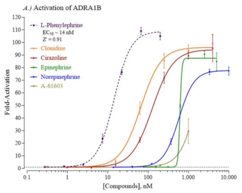
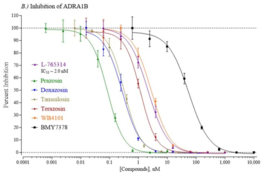
- Screen test samples to quantify functional activity, either agonist or antagonist, that they may exert against human adrenoreceptor alpha 1B
- Robust technology provides sustained response for consistent and reproducible data acquisition
- Included in the kit: Ready-to-use, pre-transfected reporter cells | Optimized media | Reference agonist | Luciferase detection reagent | Cell culture-ready assay plate
Technical Support & Resources
Visit our FAQ
Contact Us
Toll Free Phone (USA and Canada Only): (888) 526-5351
Direct Phone: (734) 975-3888
Product Categories
Product Type
Application
Technical Information
Shipping & Storage Information
Recommended Products
Certificates of Analysis & Batch Specific Data
Provide batch numbers separated by commas to download or request available product inserts, QC sheets, certificates of analysis, data packs, and GC-MS data.

Bioanalysis & Assay Development Services
Your Vision. Our Expertise.
- Bioanalysis and compound screening using Cayman or qualified commercial assay kits
- Development and qualification of fit-for-purpose assays in a variety of formats and platforms
- Experienced scientists dedicated to developing the best strategy for your project
Product Description
This is an all-inclusive cell-based luciferase reporter assay kit targeting the the Human Adrenoreceptor Alpha 1B (ADRA1B). INDIGO’s ADRA1A reporter assay utilizes proprietary mammalian cells that have been engineered to provide constitutive expression of the ADRA1B. In addition to ADRA1B Reporter Cells, this kit provides two optimized media for use during cell culture and in diluting the user’s test samples, a reference agonist, Luciferase Detection Reagent, and a cell culture-ready assay plate. The principal application of this assay is in the screening of test samples to quantify any functional activity, either agonist or antagonist, that they may exert against ADRA1B. This kit provides researchers with clear, reproducible results, exceptional cell viability post-thaw, and consistent results lot to lot. Kits must be stored at -80C. Do not store in liquid nitrogen. Note: reporter cells cannot be refrozen or maintained in extended culture.
The adrenoreceptors (a.k.a. adrenergic receptors) mediate the action of the sympathetic nervous system and are activated in response to “fight-or-flight” signals. They are divided into three types, adrenoreceptor α1-, α2-, and β. Each type is further composed of three subtypes resulting in 9 different types (α1A, α1B, α1D, α2A, α2B, α2C, β1, β2, and β3).
Adrenoreceptors belong to the G-Protein-coupled receptor (GPCR) family. They all display the characteristic seven transmembrane helices, the extracellular loops which contribute to ligand binding, and the intracellular carboxy tail that associates with trimeric G proteins. All nine types of adrenoreceptors are activated by the same endogenous catecholamines (epinephrine and norepinephrine); however, the specificity of their responses depends on the G-proteins and effectors systems they associate with in a tissue and time specific manner.
Adrenoreceptor alpha1B (ADRA1B) signals through the Gαq/11 family of G proteins. Upon binding to a catecholamine, ADRA1B undergoes a conformational change that triggers the activation of Gαq/11 proteins via an exchange of GDP with GTP, followed by the activation of phospholipase C, the release of inositol triphosphate (IP3) which binds to its receptors on the endoplasmic reticulum and triggers the release of calcium and activation of the protein kinase C. ADRA1B is expressed in a variety of tissues such as blood vessels, heart, brain, and immune cells. ADRA1B plays a role in the modulation of blood pressure, in the regulation of glucose metabolism, lipid metabolism, and leptin secretion, in male fertility and in cancer. In addition, ARA1B is of interest in the development of therapeutics for the treatment of ocular vascular diseases.[INDIGO Catalog Nos. IB31101, IB31102]
WARNING This product is not for human or veterinary use.
Contact Info
Cayman Chemical1180 East Ellsworth RoadAnn Arbor, Michigan 48108 USAToll Free: (800) 364-9897(USA and Canada only)Fax: (734) 971-3640


