
Technical Support & Resources
Visit our FAQ
Contact Us
Toll Free Phone (USA and Canada Only): (888) 526-5351
Direct Phone: (734) 975-3888
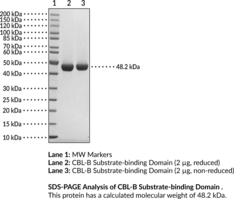
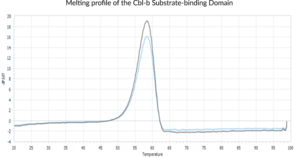
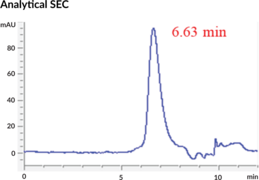
Technical Information
- Casitas B-lineage Lymphoma Proto-oncogene B
- Casitas B Lymphoma-B
- RING Finger Protein 56
- RING-type E3 Ubiquitin Transferase Cbl-b
- RNF56
- SH3-binding Protein Cbl-b
- Signal Transduction Protein Cbl-b
- E3 Ubiquitin-protein Ligase Cbl-b
Shipping & Storage Information
Recommended Products
Certificates of Analysis & Batch Specific Data
Provide batch numbers separated by commas to download or request available product inserts, QC sheets, certificates of analysis, data packs, and GC-MS data.

Visit Our Cancer Resource Center
Find Tools & Resources to Study the Hallmarks of Cancer
- Cancer cell signaling & regulation
- Cancer metabolism
- Tumor microenvironment
Product Description
Casitas B-lineage lymphoma proto-oncogene B (Cbl-b) is an E3 ubiquitin ligase and a member of Cbl RING-type E3 ubiquitin ligases.1,2 It is composed of an N-terminal tyrosine kinase-binding domain, a helix linker region, and a RING finger domain, which is necessary for Cbl-b homodimerization and heterodimerization with the related homolog c-Cbl, and a C-terminal region containing proline- and tyrosine-rich motifs and a ubiquitin-association domain.2 Cbl-b is autoinhibited by its helix linker region but folds into the active conformation following tyrosine 371 phosphorylation by various kinases.3 Cbl-b is ubiquitously expressed but primarily found in leukocytes and is found in the cytoplasm.1 It has roles in negatively regulating immune cell responses, preventing autoimmune activity, and promoting immune tolerance by targeting receptor and non-receptor tyrosine kinase signaling proteins for proteasomal degradation.1,4 Knockout of Cblb increases the percentage of natural killer (NK) cells expressing IFN-γ, as well as decreases tumor volume and number of total metastases, in a B16/F10 murine melanoma model of metastasis.4 Knockout of Cblb increases serum IgG levels, as well as induces Cd28-independent lymphocyte hyperproliferation and B and T cell infiltration into the pancreas, salivary glands, and lungs, in mice.5 Cbl-b levels are decreased in T cell lymphocytes isolated from patients with systemic lupus erythematosus (SLE).6 Cayman's Cbl-b Substrate-binding Domain (human, recombinant) protein has a calculated molecular weight of 48.2 kDa.
WARNING This product is not for human or veterinary use.
References & Product Citations
1. Modulation of immune cell functions by the E3 ligase Cbl-
2. The co-
3. Casitas B-
4. The E3 ligase Cbl-
5. Negative regulation of lymphocyte activation and autoimmunity by the molecular adaptor Cbl-
6. Expression and function of Cbl-
Contact Info
Cayman Chemical1180 East Ellsworth RoadAnn Arbor, Michigan 48108 USAToll Free: (800) 364-9897(USA and Canada only)Fax: (734) 971-3640


