
Technical Support & Resources
Visit our FAQ
Contact Us
Toll Free Phone (USA and Canada Only): (888) 526-5351
Direct Phone: (734) 975-3888
Product Categories
Product Type
Application
Technical Information
- Histone Deacetylase 7
Shipping & Storage Information
Recommended Products
Certificates of Analysis & Batch Specific Data
Provide batch numbers separated by commas to download or request available product inserts, QC sheets, certificates of analysis, data packs, and GC-MS data.

Visit Our Cancer Resource Center
Find Tools & Resources to Study the Hallmarks of Cancer
- Cancer cell signaling & regulation
- Cancer metabolism
- Tumor microenvironment
Product Description
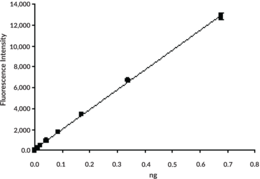
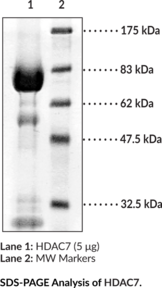
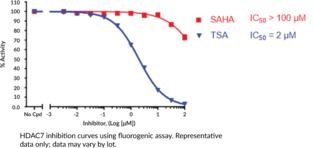
Histone deacetylase 7 (HDAC7) is a zinc-dependent metalloenzyme and class IIa HDAC.1 It is composed of an N-terminal regulatory domain, which contains a myocyte-specific enhancer factor 2 (MEF2) binding site, three 14-3-3 binding sites, and a nuclear localization signal, a catalytic domain, and a C-terminal domain that contains a nuclear export signal.1 HDAC7 shuttles between the cytoplasm, mitochondria, and nucleus and is expressed in the heart, placenta, pancreas, lungs, and skeletal muscle.2,3 It acts as a transcriptional corepressor and has many binding partners, including MEF2, nuclear receptor co-repressor (NCOR), and hypoxia-inducible factor-1α (HIF-1α), and its enzymatic activity is dependent on association with HDAC3.1,2 HDAC7 is involved in immunity, angiogenesis, embryonic development, muscle cell differentiation, and apoptosis.4,5,3 Knockdown of HDAC7 inhibits sphere formation of breast cancer stem cells (CSCs) in vitro.6 Hdac7-/- is embryonic lethal and induces hemorrhages, pericardial effusion, and enlarged dorsal aortae in mice.7 Expression of HDAC7 is increased in patients with various cancers and is associated with poor prognosis.4 Cayman's HDAC7 (human, recombinant) protein can be used for enzyme activity assays.
WARNING This product is not for human or veterinary use.
References & Product Citations
1. Class II histone deacetylases: From sequence to function, regulation, and clinical implication. Mol. Cell. Biol. 25(8), 2873-2884 (2005).
2. Human HDAC7 histone deacetylase activity is associated with HDAC3 in vivo. The Journal of Biological Chemisty 276(38), 35826-35835 (2001).
3. Cytoplasmic sequestration of HDAC7 from mitochondrial and nuclear compartments upon initiation of apoptosis. The Journal of Biological Chemisty 279(49), 51218-51225 (2004).
4. HDAC7: A promising target in cancer. Front. Oncol. 14, 1327933 (2024).
5. Histone deacetylases (HDACs): Characterization of the classical HDAC family. Biochem J. 370(Pt 3), 737-749 (2003).
6. Identification of a cancer stem cell-
7. Histone deacetylase 7 maintains vascular integrity by repressing matrix metalloproteinase 10. Cell 126(2), 321-334 (2006).
Contact Info
Cayman Chemical1180 East Ellsworth RoadAnn Arbor, Michigan 48108 USAToll Free: (800) 364-9897(USA and Canada only)Fax: (734) 971-3640


