
Technical Support & Resources
Visit our FAQ
Contact Us
Toll Free Phone (USA and Canada Only): (888) 526-5351
Direct Phone: (734) 975-3888
Product Categories
Application
Technical Information
- cGMP
- Guanosine 3',5'-cyclic mononucleotide
- Guanosine 3',5'-cyclic monophosphate
Shipping & Storage Information
Recommended Products
Certificates of Analysis & Batch Specific Data
Provide batch numbers separated by commas to download or request available product inserts, QC sheets, certificates of analysis, data packs, and GC-MS data.
Product Description
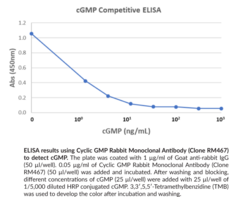
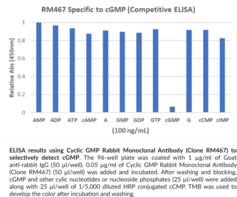
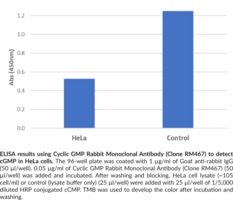
Cyclic GMP (cGMP) is a key intracellular second messenger that transduces cellular signaling events through cGMP-gated (CNG) ion channels, phosphodiesterases (PDEs), and cGMP-dependent protein kinases (cGKs).1,2,3 cGMP is synthesized from GTP by membrane-bound and soluble guanylate cyclase (GC) enzymes, which are activated in response to a variety of hormones, enterotoxins, drugs, and nitric oxide, among other factors. Intracellular accumulation of cGMP induces ion flux, increases or decreases the cAMP response via inhibition or stimulation of cAMP-dependent PDEs, respectively, and activates cGKs. The relative abundance of cGMP within a given cell can serve as a marker for activation by agonists acting through particulate GC at the cell surface or intracellular activation of soluble GC (sGC) by nitric oxide and its rate of breakdown to GMP by PDEs. cGMP signaling is involved in diverse biological processes, including platelet aggregation, blood pressure regulation, skeletal growth, gastrointestinal ion transport, vision, olfaction, thermosensitization, and synaptic plasticity. Cayman’s Cyclic GMP Rabbit Monoclonal Antibody (Clone RM467) can be used for ELISA.
WARNING This product is not for human or veterinary use.
References & Product Citations
1. The cGMP system: Components and function. Biol. Chem. 401(4), 447-469 (2020).
2. Molecular physiology of membrane guanylyl cyclase receptors. Physiol. Rev. 96(2), 751-804 (2016).
3. The nitric oxide and cGMP signal transduction system: Regulation and mechanism of action. Biochim. Biophys. Acta 1178, 153-175 (1993).
Contact Info
Cayman Chemical1180 East Ellsworth RoadAnn Arbor, Michigan 48108 USAToll Free: (800) 364-9897(USA and Canada only)Fax: (734) 971-3640


