
Technical Support & Resources
Visit our FAQ
Contact Us
Toll Free Phone (USA and Canada Only): (888) 526-5351
Direct Phone: (734) 975-3888
Product Categories
Application
Technical Information
- CHOP
- C/EBPζ
- C/EBP-homologous Protein
- DNA Damage-inducible Transcript 3
- DNA Damage-Induced Gene 153
- Growth Arrest and DNA Damage-Inducible Protein 153
- GADD153
Shipping & Storage Information
Recommended Products
Certificates of Analysis & Batch Specific Data
Provide batch numbers separated by commas to download or request available product inserts, QC sheets, certificates of analysis, data packs, and GC-MS data.
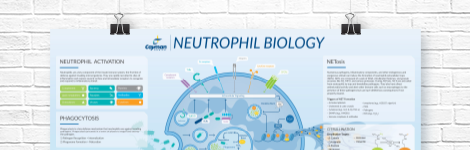
Neutrophil Biology Wall Poster
Explore how neutrophils shape the immune response in health and disease. This poster highlights neutrophil pathogen defense mechanisms, including phagocytosis, degranulation, and NETosis, as well as neutrophil roles in inflammation and NET-associated pathologies.
DOWNLOAD NOWProduct Description
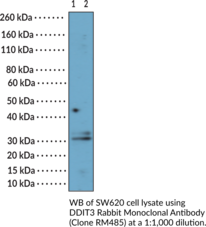
DNA damage-inducible transcript 3 (DDIT3), also known as C/EBP-homologous protein (CHOP), is a transcription factor and member of the CCAAT/enhancer-binding protein (C/EBP) family.1,2 It is composed of an N-terminal transactivation domain and a C-terminal leucine zipper domain containing a DNA-binding region.2 DDIT3 is ubiquitously expressed and found in the cytosol at low levels.1 It is phosphorylated at serine 78 (Ser78) and Ser81 in response to endoplasmic reticulum (ER) stress, such as low calcium, glucose, or amino acid levels, and enters the nucleus and forms heterodimers with C/EBP family members to either promote or inhibit gene expression.1,3 DDIT3 induces apoptosis in response to calcium store depletion induced by nitric oxide (NO) in primary mouse pancreatic β-cells.4 It induces macrophage M1 polarization and increases tooth pulp inflammation in a mouse model of pulpitis.5 Knockdown of DDIT3 restores erythropoiesis in hematopoietic stem cells isolated from patients with anemia.6 Cayman's DDIT3 Rabbit Monoclonal Antibody (Clone RM485) can be used for Western blot (WB).
WARNING This product is not for human or veterinary use.
References & Product Citations
1. Roles of CHOP/GADD153 in endoplasmic reticulum stress. Cell Death Differ. 11(4), 381-389 (2004).
2. The role of C/EBP isoforms in the control of inflammatory and native immunity functions. The Journal of Biological Chemisty 273(45), 29279-29282 (1998).
3. Palmitate increases β-
4. Nitric oxide-
5. DDIT3 aggravates pulpitis by modulating M1 polarization through EGR1 in macrophages. Int. Immunopharmacol. 120, 110328 (2023).
6. The transcription factor DDIT3 is a potential driver of dyserythropoiesis in myelodysplastic syndromes. Nat. Commun. 13(1), 7619 (2022).
Contact Info
Cayman Chemical1180 East Ellsworth RoadAnn Arbor, Michigan 48108 USAToll Free: (800) 364-9897(USA and Canada only)Fax: (734) 971-3640


