
Technical Support & Resources
Visit our FAQ
Contact Us
Toll Free Phone (USA and Canada Only): (888) 526-5351
Direct Phone: (734) 975-3888
Product Categories
Research Area
Technical Information
- DNA-dependent Protein Kinase Catalytic Subunit
- DNA-PK Catalytic Subunit
- p460
Shipping & Storage Information
Recommended Products
Certificates of Analysis & Batch Specific Data
Provide batch numbers separated by commas to download or request available product inserts, QC sheets, certificates of analysis, data packs, and GC-MS data.

Visit Our Cancer Resource Center
Find Tools & Resources to Study the Hallmarks of Cancer
- Cancer cell signaling & regulation
- Cancer metabolism
- Tumor microenvironment
Product Description
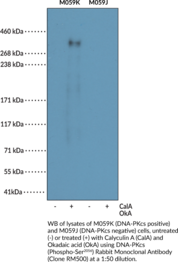
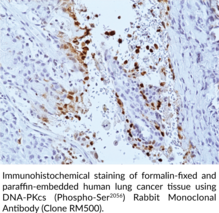
DNA-dependent protein kinase catalytic subunit (DNA-PKcs) is a member of the PI3K-related kinase (PIKK) family.1,2,3 It is composed of an N-terminal domain, which consists of two domains of HEAT repeats, a FAT homology domain, a FKBP12-rapamycin-binding (FRB) domain, a kinase domain, a PIKK regulatory domain, and a C-terminal FAT domain (FATC). DNA-PKcs localizes to the nucleus, cytoplasm, plasma membrane, cytoskeleton, and lipid rafts.2,4 It is involved in DNA double-strand break (DSB) repair through non-homologous end-joining (NHEJ) and homologous recombination (HR) pathways and contains numerous phosphorylation sites that modify its activity, such as Ser2056, which must be autophosphorylated for NHEJ to occur in response to DSBs.1,2,3 DNA-PKcs also plays a role in mitosis, telomere maintenance, transcriptional regulation, innate and adaptive immunity, and senescence, among many other processes. DNA-PKcs interacts with Ku70/Ku80 to form the DNA-PK holoenzyme, which acts on various substrates, including histone H2AX, heat shock protein 90 (Hsp90), and Artemis.2,3 High expression or increased activity of DNA-PKcs is associated with metastasis, poor prognosis, and radio- and chemoresistance in various cancers.2 Cayman’s DNA-PKcs (Phospho-Ser2056) Rabbit Monoclonal Antibody (Clone RM500) can be used for immunohistochemistry (IHC) and Western blot (WB) applications.
WARNING This product is not for human or veterinary use.
References & Product Citations
1. DNA-
2. DNA-
3. The multifaceted functions of DNA-
4. A DNA-
Contact Info
Cayman Chemical1180 East Ellsworth RoadAnn Arbor, Michigan 48108 USAToll Free: (800) 364-9897(USA and Canada only)Fax: (734) 971-3640


