
Technical Support & Resources
Visit our FAQ
Contact Us
Toll Free Phone (USA and Canada Only): (888) 526-5351
Direct Phone: (734) 975-3888
Product Categories
Technical Information
- EP-GP
- Extraparotid Glycoprotein
- gp17
- Gross Cystic Disease Fluid Protein 15
- Prolactin-inducible Protein
- PIP
- SABP
- Secretory Actin-binding Protein
Shipping & Storage Information
Recommended Products
Certificates of Analysis & Batch Specific Data
Provide batch numbers separated by commas to download or request available product inserts, QC sheets, certificates of analysis, data packs, and GC-MS data.

Visit Our Cancer Resource Center
Find Tools & Resources to Study the Hallmarks of Cancer
- Cancer cell signaling & regulation
- Cancer metabolism
- Tumor microenvironment
Product Description
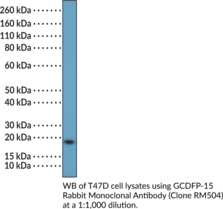
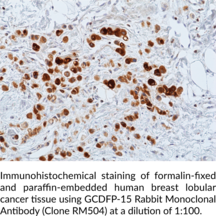
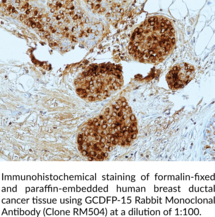
Gross cystic disease fluid protein 15 (GCDFP-15) is a secretory glycoprotein whose expression is induced by hormones, including prolactin, growth hormone, and dihydrotestosterone.1,2,3 It is composed of an immunoglobulin fold and has aspartyl protease activity.1,2 GCDFP-15 is expressed in apocrine, eccrine, salivary, and sweat glands, among others.4 It is involved in host defense against bacteria, innate and adaptive immunity, fertilization, and tumorigenesis.1,5 Decreased protein levels of GCDFP-15 are associated with increased tumor size and node-positivity in patients with infiltrating apocrine breast carcinomas.6 Saliva levels of GCDFP-15 are decreased in patients with primary Sjögren’s syndrome.7 Cayman’s GCDFP-15 Rabbit Monoclonal Antibody (Clone RM504) can be used for immunohistochemistry (IHC) and Western blot (WB) applications.
WARNING This product is not for human or veterinary use.
References & Product Citations
1. Prolactin inducible protein in cancer, fertility and immunoregulation: Structure, function and its clinical implications. Cell. Mol. Life Sci. 66(3), 447-459 (2009).
2. Pathogenesis of keratoconus: The intriguing therapeutic potential of Prolactin-
3. Isolation and sequencing of a cDNA clone for a prolactin-
4. Spectrum of GCDFP-
5. Prolactin-
6. Expression of GCDFP-
7. Gross cystic disease fluid protein-
Contact Info
Cayman Chemical1180 East Ellsworth RoadAnn Arbor, Michigan 48108 USAToll Free: (800) 364-9897(USA and Canada only)Fax: (734) 971-3640


