
Technical Support & Resources
Visit our FAQ
Contact Us
Toll Free Phone (USA and Canada Only): (888) 526-5351
Direct Phone: (734) 975-3888
Product Categories
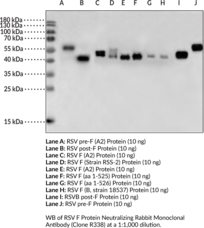
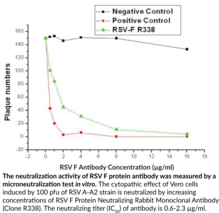
Technical Information
- Respiratory Syncytial Virus F Protein
- Respiratory Syncytial Virus Fusion Protein
- RSV Fusion Protein
Shipping & Storage Information
Recommended Products
Certificates of Analysis & Batch Specific Data
Provide batch numbers separated by commas to download or request available product inserts, QC sheets, certificates of analysis, data packs, and GC-MS data.
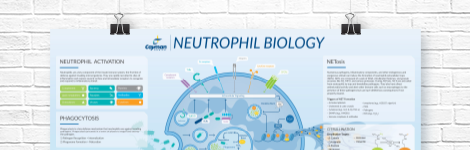
Neutrophil Biology Wall Poster
Explore how neutrophils shape the immune response in health and disease. This poster highlights neutrophil pathogen defense mechanisms, including phagocytosis, degranulation, and NETosis, as well as neutrophil roles in inflammation and NET-associated pathologies.
DOWNLOAD NOWProduct Description
Respiratory syncytial virus (RSV) fusion (F) protein is a surface glycoprotein encoded by the F gene in RSV RNA.1 It is synthesized as an inactive precursor protein, F0, that undergoes proteolytic cleavage to release the F1 and F2 subunits, which are joined together by two disulfide bonds.2 Mature RSV F protein is composed of an N-terminal fusion peptide (FP), two heptad repeats (HRs), a transmembrane domain, and a cytoplasmic tail and assembles into homotrimers on the virus surface.1 Upon insertion of the FP in the target cell membrane, the HRs form a six-helical bundle (6-HB) that enables RSV to fuse with the target cell. RSV F protein is highly conserved between RSV subtypes A and B with approximately 90% amino acid identities.3 RSV is the most common causative agent of pediatric lower respiratory tract infections.4 Cayman's RSV F Protein Neutralizing Rabbit Monoclonal Antibody (Clone R338) can be used for ELISA and Western blot (WB) applications.
WARNING This product is not for human or veterinary use.
References & Product Citations
1. Challenges and opportunities for respiratory syncytial virus vaccines. Curr. Top. Microbiol. Immunol. 372, 391-404 (2013).
2. Contribution of cysteine residues in the extracellular domain of the F protein of human respiratory syncytial virus to its function. Virol. J. 3, 34 (2006).
3. Analysis of respiratory syncytial virus fusion protein from clinical isolates of Korean children in palivizumab era, 2009-
4. Global burden of acute lower respiratory infections due to respiratory syncytial virus in young children: A systematic review and meta-
Contact Info
Cayman Chemical1180 East Ellsworth RoadAnn Arbor, Michigan 48108 USAToll Free: (800) 364-9897(USA and Canada only)Fax: (734) 971-3640


