
Technical Support & Resources
Visit our FAQ
Contact Us
Toll Free Phone (USA and Canada Only): (888) 526-5351
Direct Phone: (734) 975-3888
Product Categories
Product Type
Technical Information
- CNTN1
- GP135
- Neural Cell Surface Protein F3
Shipping & Storage Information
Recommended Products
Certificates of Analysis & Batch Specific Data
Provide batch numbers separated by commas to download or request available product inserts, QC sheets, certificates of analysis, data packs, and GC-MS data.

Visit Our Cancer Resource Center
Find Tools & Resources to Study the Hallmarks of Cancer
- Cancer cell signaling & regulation
- Cancer metabolism
- Tumor microenvironment
Product Description
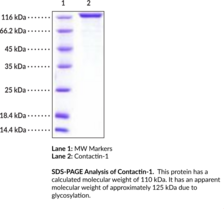
Contactin-1 is a neural cell adhesion molecule and member of the immunoglobulin (Ig) superfamily.1 It is composed of six Ig-like repeats, four fibronectin type III-like domains, and a hydrophobic C-terminal sequence that contains a glycosylphosphatidylinositol (GPI) anchor site.1,2 Contactin-1 is primarily expressed in the brain and to a lesser extent in lung, pancreas, skeletal muscle, and kidney.2 It is involved in many neuronal developmental processes, including axonal and neurite growth, glial cell differentiation, myelination, and synaptogenesis.1,3 Contactin-1 has several interaction partners, such as Notch, protein tyrosine phosphatase α (PTPα), and tenascin-R, and binds to them in either cis or trans.3 Increased expression of CNTN1, the gene encoding contactin-1, is associated with decreased overall survival in patients with bladder urothelial carcinoma or stomach adenocarcinoma.1 Mutations in CNTN1 are associated with familial lethal congenital myopathy.4 Cerebrospinal fluid (CSF) levels of contactin-1 are decreased in patients with Parkinson’s disease.5 Cayman’s Contactin-1 (human, recombinant) protein consists of 984 amino acids, has a calculated molecular weight of 110 kDa, and a predicted N-terminus of Glu21 after signal peptide cleavage. By SDS-PAGE, under reducing conditions, the apparent molecular mass of the protein is 125 kDa due to glycosylation.
WARNING This product is not for human or veterinary use.
References & Product Citations
1. Contactin 1: An important and emerging oncogenic protein promoting cancer progression and metastasis. Genes (Basel) 11(8), 874 (2020).
2. Identification and characterization of the human cell adhesion molecule contactin. Brain Res. Mol. Brain Res. 21(1-2), 1-8 (1994).
3. Contactins: Emerging key roles in the development and function of the nervous system. Cell Adh. Migr. 3(1), 64-70 (2009).
4. Mutations in contactin-
5. Contactin-
Contact Info
Cayman Chemical1180 East Ellsworth RoadAnn Arbor, Michigan 48108 USAToll Free: (800) 364-9897(USA and Canada only)Fax: (734) 971-3640


