
Technical Support & Resources
Visit our FAQ
Contact Us
Toll Free Phone (USA and Canada Only): (888) 526-5351
Direct Phone: (734) 975-3888
Product Categories
Product Type
Technical Information
- CNTN6
- hNB-3
- Neural Recognition Molecule NB-3
Shipping & Storage Information
Recommended Products
Certificates of Analysis & Batch Specific Data
Provide batch numbers separated by commas to download or request available product inserts, QC sheets, certificates of analysis, data packs, and GC-MS data.
Product Description
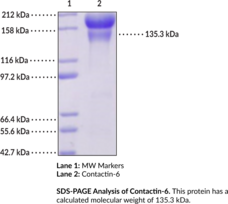
Contactin-6 is a neural cell adhesion molecule and member of the immunoglobulin (Ig) superfamily.1 It is composed of six Ig-like repeats, four fibronectin type III-like domains, and a hydrophobic C-terminal sequence that contains a glycosylphosphatidylinositol (GPI) anchor site. Contactin-6 is ubiquitously expressed in the brain with the highest levels in the cerebellum.2 It is involved in neuronal apoptosis, axon regeneration in response to injury, and dendrite orientation.3,1 Contactin-6 forms stabilized interactions with proteins such as latrophilin-1, Notch, and protein tyrosine phosphatase α (PTPα), PTPγ, and PTPσ, and binds to them in either cis or trans. Homozygous knockout of CNTN6, the gene encoding contactin-6, in male mice decreases contactin-6 levels in the accessory olfactory system and reduces mating preference toward estrous female mice.4 Cayman’s Contactin-6 (human, recombinant) protein consists of 1,218 amino acids, has a calculated molecular weight of 135.3 kDa, and a predicted N-terminus of Asp20 after signal peptide cleavage.
WARNING This product is not for human or veterinary use.
References & Product Citations
1. A current view on contactin-
2. cDNA cloning and chromosomal localization of neural adhesion molecule NB-
3. Association of cell adhesion molecules contactin-
4. Contactin-
Contact Info
Cayman Chemical1180 East Ellsworth RoadAnn Arbor, Michigan 48108 USAToll Free: (800) 364-9897(USA and Canada only)Fax: (734) 971-3640


