
Technical Support & Resources
Visit our FAQ
Contact Us
Toll Free Phone (USA and Canada Only): (888) 526-5351
Direct Phone: (734) 975-3888
Product Categories
Product Type
Technical Information
Shipping & Storage Information
Recommended Products
Certificates of Analysis & Batch Specific Data
Provide batch numbers separated by commas to download or request available product inserts, QC sheets, certificates of analysis, data packs, and GC-MS data.
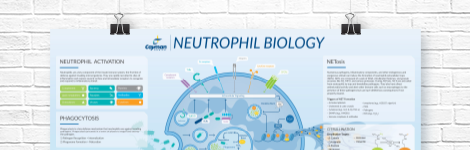
Neutrophil Biology Wall Poster
Explore how neutrophils shape the immune response in health and disease. This poster highlights neutrophil pathogen defense mechanisms, including phagocytosis, degranulation, and NETosis, as well as neutrophil roles in inflammation and NET-associated pathologies.
DOWNLOAD NOWProduct Description
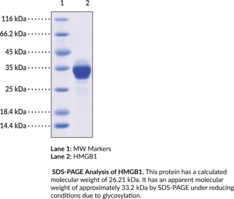
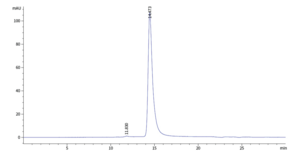
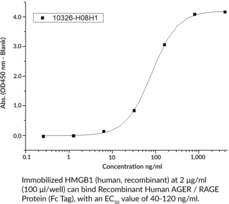
High mobility group protein B1 (HMGB1) is a member of the HMGB subfamily of proteins with roles in promoting proper DNA structure and mediating extracellular inflammation.1,2 It is composed of two HMG box DNA-binding domains and a negatively charged C-terminus.1,3 HMGB1 is ubiquitously expressed and found in the nucleus and extracellular space.1 In the nucleus, it binds DNA and histones and ensures proper DNA structure.3 HMGB1 is secreted by cells in response to regulated cell death pathways, tissue damage, ischemia, organ transplants, or pathogen infection, where it further increases local inflammation and stimulates additional HMGB1 secretion by immune cells.1,2,4 Serum levels of HMGB1 are increased in patients with systemic inflammatory response syndrome (SIRS), a condition characterized by immune system hyperreactivity to infectious and non-infectious stimuli, and a SNP in the promoter region of HMGB1 is associated with poor survival in SIRS patients.5 Cayman's HMGB1 (human, recombinant) protein can be used in binding assays. This protein consists of 225 amino acids and has a calculated molecular weight of 26.21 kDa. By SDS-PAGE, under reducing conditions, the apparent molecular mass of the protein is approximately 33.2 kDa due to glycosylation.
WARNING This product is not for human or veterinary use.
References & Product Citations
1. The multifunctional protein HMGB1: 50 years of discovery. Nat. Rev. Immunol. 23(12), 824-841 (2023).
2. Targeting HMGB1 in inflammation. Biochim. Biophys. Acta 1799(1-2), 149-156 (2010).
3. Specific recognition of cruciform DNA by nuclear protein HMG1. Science 243(4894 Pt 1), 1056-1059 (1989).
4. Anti-
5. Association of HMGB1 polymorphisms with outcome in patients with systemic inflammatory response syndrome. Crit. Care 12(3), R83 (2008).
Contact Info
Cayman Chemical1180 East Ellsworth RoadAnn Arbor, Michigan 48108 USAToll Free: (800) 364-9897(USA and Canada only)Fax: (734) 971-3640


