Technical Support & Resources
Visit our FAQ
Contact Us
Toll Free Phone (USA and Canada Only): (888) 526-5351
Direct Phone: (734) 975-3888
Product Categories
Research Area
Technical Information
- Galactosylceramide I3-sulfate
- Ganglioside SM4
- I3SO3-GalCer
- SM4
- Sulfated Galactocerebroside
- 3-O-Sulfogalactosylceramide
- Sulphatide
Shipping & Storage Information
Recommended Products
Certificates of Analysis & Batch Specific Data
Provide batch numbers separated by commas to download or request available product inserts, QC sheets, certificates of analysis, data packs, and GC-MS data.
Lipid Resource Center
Discover Products & Resources for Lipid Research
- High-purity lipid standards
- Lipid roles in biology
- Lipids in health & disease
- Lipids for pharmaceutical development
- Protocols, advice, & resources
Product Description
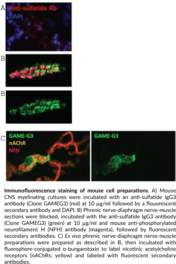
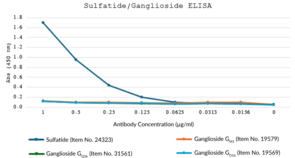
Sulfatides are endogenous sulfoglycolipids with various biological activities in the central and peripheral nervous systems, pancreas, and immune system.1 They are produced from the combination of ceramide and UDP-galactose in the endoplasmic reticulum followed by sulfation in the Golgi apparatus. The ceramide portion contains variable fatty acid chain lengths, which are tissue- and pathology-dependent. Sulfatides are primarily found in the myelin sheath of oligodendrocytes and Schwann cells, with smaller chain lengths predominant during development and longer chain lengths predominant in mature cells.2 They accumulate in the lysosomes of patients with metachromatic leukodystrophy, a disorder characterized by arylsulfatase A deficiency.1,3 Sulfatides are also located in pancreatic β-cells and inhibit insulin release from isolated rat pancreatic islet cells, suggesting a potential role in diabetes.4 Sulfatides can induce inflammation in glia in vitro and certain sulfatides, such as C24:1 3’-sulfo-galactosylceramide, can induce an immune response in vitro in mouse splenocytes.5,6 They also inhibit influenza A virus infection in vitro.7 Brain levels of sulfatides are decreased in patients with preclinical Alzheimer’s disease, and autoantibodies against sulfatide have been found in cerebrospinal fluid (CSF) of patients with multiple sclerosis.8,9 Intratumoral levels of sulfatide are positively correlated with increased tumor stage in patients with ovarian cancer.10 Cayman’s Sulfatide Recombinant Monoclonal Antibody (Clone GAMEG3) can be used for ELISA and immunofluorescence (IF) applications.
WARNING This product is not for human or veterinary use.
References & Product Citations
1. Role of sulfatide in normal and pathological cells and tissues. J. Lipid Res. 53(8), 1437-1450 (2012).
2. Changes in the fatty acid composition of cerebrosides and sulfatides of human nervous tissue with age. J. Lipid Res. 9(2), 215-225 (1968).
3. Quantification of plasma sulfatides by mass spectrometry: Utility for metachromatic leukodystrophy. Anal. Chim. Acta 955, 79-85 (2017).
4. Sulfatide controls insulin secretion by modulation of ATP-
5. Sulfatide, a major lipid component of myelin sheath, activates inflammatory responses as an endogenous stimulator in brain-
6. Structural basis for CD1d presentation of a sulfatide derived from myelin and its implications for autoimmunity. J. Exp. Med. 202(11), 1517-1526 (2005).
7. Sulphatide binds to human and animal influenza A viruses, and inhibits the viral infection. Biochem. J. 318(Pt 2), 389-393 (1996).
8. Specific changes of sulfatide levels in individuals with preclinical Alzheimer’s disease: An early event in disease pathogenesis. J. Neurochem. 127(6), 733-738 (2013).
9. Antibodies to sulfatide in cerebrospinal fluid of patients with multiple sclerosis. J. Neuroimmunol. 139(1-2), 76-80 (2003).
10. Sulfatides in ovarian tumors: Clinicopathological correlates. Int. J. Gynecol. Cancer 14(1), 89-93 (2004).
Contact Info
Cayman Chemical1180 East Ellsworth RoadAnn Arbor, Michigan 48108 USAToll Free: (800) 364-9897(USA and Canada only)Fax: (734) 971-3640