
Technical Support & Resources
Visit our FAQ
Contact Us
Toll Free Phone (USA and Canada Only): (888) 526-5351
Direct Phone: (734) 975-3888
Product Categories
Product Type
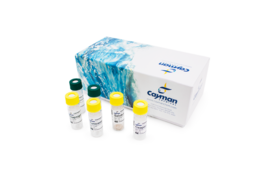
ER Stress/Unfolded Protein Response (UPR) Reagent Kit
Item No. 44899
Technical Information
- Endoplasmic Reticulum Stress/Unfolded Protein Response
- ER Stress/UPR
Shipping & Storage Information
Recommended Products
Certificates of Analysis & Batch Specific Data
Provide batch numbers separated by commas to download or request available product inserts, QC sheets, certificates of analysis, data packs, and GC-MS data.
Product Description
The components of Cayman’s ER Stress/UPR Reagent Kit enable the induction and selective modulation of ER stress and the UPR in cultured cells. Each reagent is supplied individually, allowing users to strategically combine inducers and modulators, as described below, to interrogate specific UPR branches (PERK, IRE1, and/or ATF6).
Thapsigargin inhibits sarcoplasmic/endoplasmic reticulum Ca2+-ATPase (SERCA), causing depletion of calcium ions in the ER and impairment in chaperone function.1 This induces ER stress and robust UPR activation across PERK, IRE1, and ATF6 pathways.
Tunicamycin blocks N-linked glycosylation in the ER by inhibiting N-acetylglucosamine-1-phosphotransferase, leading to the accumulation of misfolded proteins and UPR activation through the PERK, IRE1, and ATF6 pathways.2
Tauroursodeoxycholic acid (TUDCA) acts as a chemical chaperone that stabilizes protein folding in the ER, thereby reducing ER stress.3,4 It has commonly been used as a protective agent to broadly suppress UPR activation and prevent ER stress-mediated cell death.5
Salubrinal inhibits the growth arrest and DNA damage-inducible protein 34-protein phosphatase 1 (GADD34-PP1) complex, preventing dephosphorylation of the PERK target eukaryotic translation initiation factor 2α (eIF2α).6 Phosphorylation of eIF2α by PERK leads to prolonged attenuation of protein translation and helps reduce ER protein-folding stress.7 Salubrinal can be used to evaluate the contribution of PERK signaling to the ER stress response.
KIRA6 is a selective inhibitor of IRE1α kinase activity that indirectly suppresses its RNase function.8 By blocking IRE1α signaling, KIRA6 reduces the IRE1-mediated UPR. KIRA6 can be used to evaluate the contribution of IRE1 signaling in ER stress.
Ceapin-A7 blocks the trafficking of ATF6 from the ER to the Golgi and thus inhibits its activation.9 Ceapin-A7 can be used to evaluate the role of ATF6 in ER stress.
WARNING This product is not for human or veterinary use.
References & Product Citations
1. Revealing protein aggregates under thapsigargin-
2. Glucose sensing and the unfolded protein response. FEBS J. 292, 3581-3595 (2025).
3. Chemical chaperones reduce ER stress and restore glucose homeostasis in a mouse model of type 2 diabetes. Science 313(5790), 1137-1140 (2006).
4. Chemical chaperone, TUDCA unlike PBA, mitigates protein aggregation efficiently and resists ER and non-
5. Tauroursodeoxycholate-
6. A selective inhibitor of eIF2α dephosphorylation protects cells from ER stress. Science 307(5711), 935-939 (2005).
7. A review of the mammalian unfolded protein response. Biotechnology and Bioengineering 108(12), 2777-2793 (2011).
8. Allosteric inhibition of the IRE1α RNase preserves cell viability and function during endoplasmic reticulum stress. Cell 158, 543-548 (2014).
9. Ceapins inhibit ATF6α signaling by selectively preventing transport of ATF6α to the Golgi apparatus during ER stress. eLife 5, e11880 (2016).
Contact Info
Cayman Chemical1180 East Ellsworth RoadAnn Arbor, Michigan 48108 USAToll Free: (800) 364-9897(USA and Canada only)Fax: (734) 971-3640


