
Technical Support & Resources
Visit our FAQ
Contact Us
Toll Free Phone (USA and Canada Only): (888) 526-5351
Direct Phone: (734) 975-3888
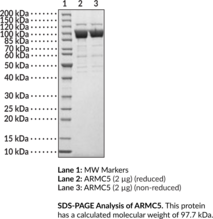
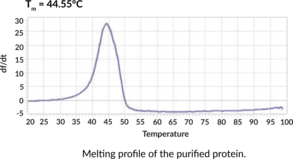
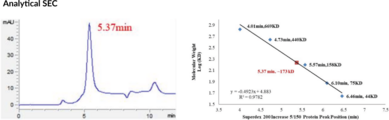
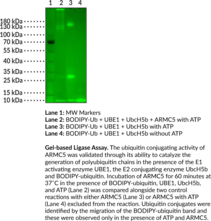
Technical Information
- Armadillo Repeat-containing Protein 5
Shipping & Storage Information
Recommended Products
Certificates of Analysis & Batch Specific Data
Provide batch numbers separated by commas to download or request available product inserts, QC sheets, certificates of analysis, data packs, and GC-MS data.

Visit Our Cancer Resource Center
Find Tools & Resources to Study the Hallmarks of Cancer
- Cancer cell signaling & regulation
- Cancer metabolism
- Tumor microenvironment
Product Description
Armadillo repeat-containing protein 5 (ARMC5) is a member of the armadillo (ARM) repeat containing family.1 It is composed of an N-terminal ARM repeat domain and C-terminal BTB/POZ domain that each act as scaffolds for protein-protein interactions. ARMC5 is ubiquitously expressed, localizes to the cytoplasm, and undergoes alternative splicing.1,2 It interacts with cullin 3 via the BTB domain to form an E3 ligase complex that ubiquitinates proteins such as sterol regulatory element binding protein (SREBP) and several RNA polymerase II subunits, including DNA-directed RNA polymerase II subunit (RPB1).3,4,5 ARMC5 is involved in T cell proliferation and differentiation, lung morphogenesis, adrenal cortex and neural tube development, and tumor suppression.1,4 Mutations in ARMC5 are associated with primary bilateral macronodular adrenal hyperplasia (PBMAH).6 Cayman’s ARMC5 (human, recombinant) protein can be used for enzyme activity assays and has a calculated molecular weight of 97.7 kDa.
WARNING This product is not for human or veterinary use.
References & Product Citations
1. .
2. .
3. .
4. .
5. .
6. .
Contact Info
Cayman Chemical1180 East Ellsworth RoadAnn Arbor, Michigan 48108 USAToll Free: (800) 364-9897(USA and Canada only)Fax: (734) 971-3640


