
Technical Support & Resources
Visit our FAQ
Contact Us
Toll Free Phone (USA and Canada Only): (888) 526-5351
Direct Phone: (734) 975-3888
Product Categories
Product Type
Application
Technical Information
- Checkpoint with Forkhead and RING Finger Domains Protein
- E3 Ubiquitin-protein Ligase CHFR
- RING Finger Protein 196
- RING-type E3 Ubiquitin Transferase CHFR
- RNF196
Shipping & Storage Information
Recommended Products
Certificates of Analysis & Batch Specific Data
Provide batch numbers separated by commas to download or request available product inserts, QC sheets, certificates of analysis, data packs, and GC-MS data.

Visit Our Cancer Resource Center
Find Tools & Resources to Study the Hallmarks of Cancer
- Cancer cell signaling & regulation
- Cancer metabolism
- Tumor microenvironment
Product Description
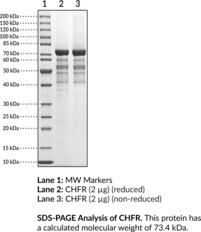
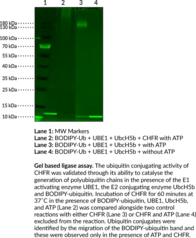
Checkpoint with forkhead and RING finger domains protein (CHFR) is an E3 ubiquitin ligase and mitotic checkpoint protein involved in regulation of the cell cycle.1 It is composed of an N-terminal forkhead-associated domain, a central RING finger domain responsible for its ubiquitinating activity, and a cysteine-rich C-terminal region, which associates with target proteins and contains a RAR-binding zinc-finger (PBZ) domain.2 CHFR is ubiquitously expressed, but its levels vary throughout the cell cycle and in response to certain stimuli.1 It ubiquitinates proteins, such as polo-like kinase (Plk), to target them for degradation and is recruited to sites of DNA damage by poly(ADP-ribose) polymerase 1 (PARP1), to ubiquitinate proteins, including PARP1. Under microtubule stress, such as that induced by microtubule depolymerizing compounds, CHFR levels increase and mitosis is delayed, but under unstressed conditions, CHFR levels decrease as the G2/M checkpoint approaches and the cell cycle progresses.2,1,3 CHFR expression is reduced in a variety of cancers, including non-small cell lung cancer (NSCLC), where its reduced expression is associated with poor prognosis.3 Cayman’s CHFR (human, recombinant) protein can be used for enzyme activity assays and has a calculated molecular weight of 73.4 kDa.
WARNING This product is not for human or veterinary use.
References & Product Citations
1. Emerging evidence for CHFR as a cancer biomarker: From tumor biology to precision medicine. Cancer Metastasis Rev. 33(1), 161-171 (2014).
2. CHFR: A Novel mitotic checkpoint protein and regulator of tumorigenesis. Transl. Oncol. 1(2), 57-64 (2008).
3. CHFR: A key checkpoint component implicated in a wide range of cancers. Cell. Mol. Life Sci. 69(10), 1669-1687 (2012).
Contact Info
Cayman Chemical1180 East Ellsworth RoadAnn Arbor, Michigan 48108 USAToll Free: (800) 364-9897(USA and Canada only)Fax: (734) 971-3640


